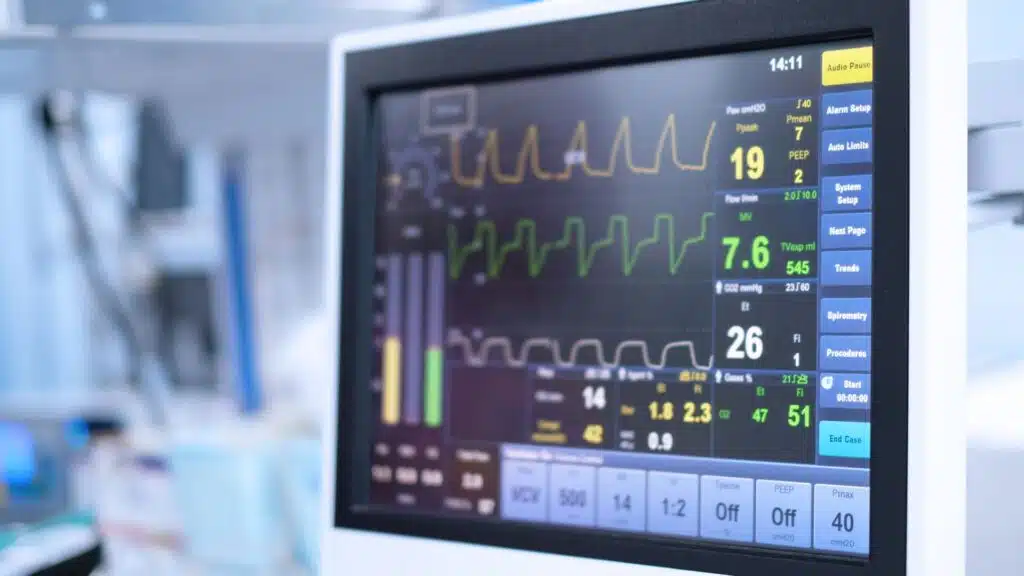
Families in Oklahoma who are navigating this moment often find that they are also navigating a system that left something out—a step taken too late, a warning sign that went unaddressed, a transfer that should have happened sooner. When the care that led to this outcome fell short of what it should have been, your family deserves to understand why and to have someone in your corner who will find out.
At Newsome Law, we work with families affected by catastrophic neurological injuries, including locked-in syndrome, to secure the financial resources needed for lifelong care. We offer free, no-pressure consultations. If you have questions about what happened and whether anyone bears responsibility, we want to help you find answers.
What Locked-In Syndrome Means for Your Family
Locked-in syndrome (LIS) is a rare condition in which a person is fully conscious and aware but unable to move or speak. It typically results from damage to the brainstem, most often from a stroke, though traumatic injury or other causes can also be responsible. The person inside remains intact. They can often see and hear. They may be able to communicate through eye movements or blinking. But the connection between the brain and the body has been severed.
The care needs that follow are profound and permanent. Most people living with locked-in syndrome require:
- Continuous or near-continuous nursing care and monitoring
- Mechanical ventilation or breathing support
- A feeding tube and nutritional management
- Physical, occupational, and speech therapy
- Augmentative communication devices and assistive technology
- Mobility equipment, positioning systems, and adaptive tools
- Regular specialist visits and ongoing medical management
- Home modifications or a specialized care facility
These are not temporary needs. They are lifelong. And their cost, year after year, can exhaust even families who planned carefully.
Oklahoma ranks among the most affordable states in the country by general cost of living measures — and care costs here are meaningfully lower than the national median. But lower relative cost does not mean manageable cost. Even in Oklahoma, caring for a loved one with locked-in syndrome can easily top one hundred thousand dollars per year.
2025 Estimated Long-Term Care Costs in Oklahoma
| Type of Care | Estimated Annual Cost in Oklahoma |
| Private duty nurse (hourly rate) | ~$86 per hour |
| Private duty nurse (visit rate) | $170 per visit |
| Long-term care facility — semi-private room | $84,315 per year |
| Long-term care facility — private room | $93,075 per year |
Source: CareScout Cost of Care Survey
This is the financial reality a successful legal outcome is designed to address: not a windfall, but a foundation and the resources your loved one will need for the rest of their life.
Our Process
We guide you through every step with clear communication and compassionate support.


Free Consultation
Call us anytime to discuss your case. We listen carefully and answer all your questions with no obligation.

Medical Review
Our team conducts a thorough investigation with qualified medical experts to determine if malpractice occurred.

Legal Action
If we find evidence of negligence, we build a strong case and handle all legal aspects on your behalf.

Secure Recovery
We fight to secure the financial resources your family needs for long-term care and peace of mind.
Stroke Care Access in Oklahoma: When Minutes Determine Outcomes
Most cases of locked-in syndrome follow a brainstem stroke. Stroke treatment is acutely time-sensitive. The longer a stroke goes untreated, the greater the injury, and the more severe the outcome.
Much of Oklahoma Is Rural
In Oklahoma, this urgency is complicated by geography. Over 30 percent of the state’s population lives in rural or non-metropolitan areas, where access to specialized stroke care has historically been limited, according to the University of Tulsa.
A comprehensive survey of Oklahoma hospitals, published in Stroke, found that while most offer basic emergency services, only four percent offer mechanical thrombectomy, i.e., the advanced endovascular procedure used to treat large vessel strokes. Neurology support and neurological intensive care are similarly scarce outside major population centers, particularly in the southeastern region of the state.
Transfer Times Can Make or Break Care
When a stroke patient in a rural Oklahoma community arrives at a local hospital, that hospital may be unable to provide the advanced treatment they need. They must be stabilized and transferred; the time it takes to move a patient from one hospital to a stroke-capable center is measured by a metric called door-in-door-out time, or DIDO. Every minute of that process is a minute the stroke is progressing.
The national guideline from the Brain Attack Coalition and the Joint Commission is fewer than 120 minutes. Oklahoma’s median DIDO score for acute ischemic stroke eligible for endovascular therapy is within this guideline (98-118 minutes), but exceeds the DIDO guideline for other acute ischemic stroke (168-193 minutes).
When a Medical Failure May Have Changed Everything
Not every case of locked-in syndrome involves negligence. Strokes can occur without warning, and even with excellent care, devastating outcomes sometimes happen. We will always tell you honestly if we do not find evidence that something went wrong.
But there are circumstances in which locked-in syndrome follows a failure in care, such as a missed step, a delayed response, or a decision that should have been made differently. These are the situations our firm investigates.
Common patterns we look for include:
- Delayed recognition of stroke symptoms: a patient presenting with sudden weakness, speech difficulty, dizziness, or other warning signs who was not immediately evaluated for stroke
- Misdiagnosis or a failure to diagnose: stroke symptoms attributed to another cause, resulting in lost treatment time
- Failure to administer time-sensitive treatments within the appropriate window
- Failure to transfer: a patient held at a facility that lacked the capability to treat their condition when a transfer to a comprehensive stroke center was indicated
- Premature discharge: a patient sent home or downgraded in care status before their condition was fully assessed
- Ignored signs of consciousness: missed signs of consciousness that family members observe
That last point deserves emphasis. Locked-in syndrome is widely misdiagnosed. Because patients cannot move or speak, they are sometimes believed to be unaware or unresponsive when they are not. The standard for evaluating LIS requires systematic testing of eye movement and blinking, which is a process that may not happen when the clinical picture is presumed to be a coma. Family members, who spend more time at the bedside, are often the first to notice that something is different.
A legal and medical review examines the full timeline: when symptoms first appeared, what was documented, what was done, what was not done, and how each decision compares to the standard of care. That review can give your family a clear picture of what happened and whether it should have happened differently.
We offer free consultations to help families begin that process. There is no obligation, no pressure, and no cost to speak with us.
Talk To Our Legal Team Today
We’re here to answer your questions and help you understand your options.
Schedule a Free Consultation
How We Work: Listening First, Then Building Your Case
Every engagement with our firm begins the same way: we listen. Before we review a single document, we want to understand:
- What you observed
- What you were told
- What felt wrong
From there, we retrieve and analyze the full medical record. We work with expert physicians and specialists who can evaluate whether the care your loved one received met the standard expected. These are not generalists offering opinions; they are practitioners with direct expertise in stroke medicine, neurology, and critical care.
We will be honest with you throughout. If the evidence does not support a negligence claim, we will tell you that directly. We do not take cases we do not believe in, and we do not pursue litigation that is not in our clients’ best interest.
When we believe a case has merit, we pursue it with full commitment. Our attorneys are directly accessible to the families we represent; you will not be passed from person to person or left waiting for updates. We involve you in every significant development, and we prepare every case as if it will go to trial, which puts us in the strongest possible position at every stage.
A successful outcome can cover the full scope of your loved one’s needs:
- Lifelong nursing care
- Medical equipment and technology
- Home modifications
- Therapy
- Lost income
- Compensation for pain, suffering, and diminished quality of life
Our goal is to build the financial foundation that allows your family to provide for your loved one with security, not constant uncertainty.
Legal Help Should Not Add to Your Burden
Families dealing with a catastrophic injury are already under extraordinary financial and emotional pressure. The idea of adding legal fees to that weight stops many people from reaching out — and it should not.
Our firm handles cases like this on a contingency basis. That means:
- There are no upfront costs of any kind.
- We offer free initial consultations with no obligation.
- We are only paid if we recover compensation for your family.
- If we do not win, you owe us nothing.
You also do not need to decide anything immediately. We understand that this is a difficult time, and we do not pressure families to make quick decisions. We are here when you are ready, and a conversation with us costs you nothing.
We Are Here to Help You Understand Your Options
If your loved one has been diagnosed with locked-in syndrome in Oklahoma, we invite you to call us. The consultation is free, completely confidential, and carries no obligation.
We will listen to what you experienced, help you understand whether a legal review makes sense, and explain exactly what that process would look like. You do not need to have all the answers before you call. That is what we are here to help with.
What Our Clients Say
Real stories from families we've helped through difficult times.
 5.0
5.0
Newsome Law are fantastic! They have been working on my case for the past 3+ years and I have not once had a bad experience with anyone who works there. They have worked tirelessly to help me through my accident and the medical bills that loomed overhead. I am extremely pleased and grateful to have them, fighting on my side during this period in my life.
5.0
Selecting a Law Firm in a time of tragedy , is one of the most important decisions you will make in your lifetime. There are so many Firms out there that will chase you down , make unrealistic commitments and set unrealistic expectations. This is the last thing that is needed in such a painful and difficult time
Newsome Law Is a step above all the rest. They are not some run-of-the-mill Firm. But rather an experienced Team of established excellence and success. As one of Newsome Law’s grateful clients, they always operated in the best interest of my family. Were always available to take my call , and were compassionate to the pain and needs of my family. Newsome Law is the right Firm for you to choose.
5.0
5 Stars???!!!! These guys deserve the universe!!!!!!! They came through with every promise and were professional, diligent, smart, friendly, and understanding of the situation I was going through every step of the way. Very happy with the customer service so if that’s a thing for you, that’s another reason to go here. Honestly you will be making a mistake if you don’t go here. Rich is top tier in the US for attorneys and he definitely fought hard to get the job done here. If you want your money… GO HERE!!!!!!!
5.0
Newsome Law represented me in a very positive manner. Always professional, courteous, supportive and attentive. They were always able to keep me apprised of the status of my case. The team on my case were always easy to work with and on top of all issues. I never had to wonder where we were at in the process. I would recommend them to anyone needing this type of help in the future.
5.0
Just an amazing experience with the Newsome Law firm. Our case was very sensitive and close to our hearts. We were treated with the utmost respect for our situation and everything was handled in a professional and timely manner. We cannot say enough good things about the entire team!
5.0
I am so pleased to have worked with this firm. The attention to detail, time spent one on one, not feeling like I was just a number and someone truly caring about what was going on with me and my case was more than I could have ever hoped for. I will use this firm again if I ever need one and will recommend to everyone who asks to reach out to Newsome Law if they find they ever need someone to represent them. More than pleased and happy with everyone and everything from the office. Thank you from the bottom of my heart!
5.0
I am so pleased to have worked with this firm. They went above and beyond for my sons case. I would highly recommend this firm to anyone. Always communicated with us, always answered all our questions and fought for my sons case to get the best. Newsome Law thank so much again for all you did. God Bless!
5.0
Partnered with this law firm under unfortunate circumstances and ended up being a great success. They understood the mission and intent, and collectively, conducted all of the behind the scenes work, resulting in a successful end result. If you want one of the best, here’s your opportunity and highly recommended.
5.0
When you’re in a hospital bed all jacked up from an accident and you google best personal injury attorneys, this is who you will find, and they are. Never had been in a lawsuit before and had never needed an attorney. They took such amazing care of me, and handled everything so professionally. A great team of paralegals and attorneys. Thank you so much guys.
Need to Speak with Someone New
Our lines are open 24/7. Call us anytime for immediate assistance.
Call Now: (407) 648 5977