Why Trust Our Team with Your Loved One’s Future
A locked-in syndrome diagnosis changes everything. The medical decisions are urgent, the financial questions are overwhelming, and the legal questions often go unasked because families don’t know where to begin. Newsome Law exists to carry that weight with you.
We don’t hand your case off to a paralegal and check in at milestones. From your first conversation through resolution, you have direct access to your attorney. We take time to understand your loved one as a person, including their life before, what they valued, and what their family needs going forward, because that understanding shapes how we build your case and how we present it.
When we pursue compensation on your family’s behalf, we are fighting for everything a lifetime of care actually requires:
- Around-the-clock nursing
- Ventilator support and specialized equipment
- Home modifications
- Rehabilitation
- The ongoing costs that insurers routinely undervalue
We also pursue damages for lost income and earning capacity, for the loss of companionship and partnership your family has suffered, and for your loved one’s pain and suffering. A successful outcome isn’t just a legal victory. It’s the difference between a family stretched past its breaking point and one that can provide their loved one with dignified, stable, long-term care, without sacrificing everything else to do it.
How We Work
Every case begins the same way: we listen. Before we talk about legal strategy, we want to understand what happened, what your family is experiencing, and what you need. Then we get to work.
We retrieve your loved one’s complete medical record and submit it for review by independent medical experts who understand what causes locked-in syndrome, and how it is, or isn’t, the result of negligence. We investigate the circumstances thoroughly: the care providers involved, the timeline, the standard of care that applied, and where it may have fallen short.
We are also honest about what we find. If the evidence does not support a negligence claim, we will tell you clearly rather than pursue a case that isn’t there. Families dealing with what your family is facing deserve straight answers, not false hope.
Newsome Law has handled complex catastrophic injury and medical malpractice cases for decades. Our locked-in syndrome lawyers understand the medical complexity these cases involve, the expert testimony they require, and what it takes to build a claim that holds up at the settlement table and, if necessary, at trial.
There Are No Upfront Costs
We know that families in this situation are not looking for another financial burden. Hiring Newsome Law costs nothing to start. Your initial consultation is free, and we take locked-in syndrome cases on a contingency fee basis, meaning you only pay us if we recover compensation for your family.
There is also no pressure to decide quickly. Take the time you need to speak with your family, gather your thoughts, and ask your questions. When you’re ready to talk, we’re here.
A free consultation is simply a conversation and a chance to understand what happened, whether you may have a claim, and what the path forward could look like. There’s no obligation, and no cost. If you’d like to take that step, contact Newsome Law today.
Our Process
We guide you through every step with clear communication and compassionate support.


Free Consultation
Call us anytime to discuss your case. We listen carefully and answer all your questions with no obligation.

Medical Review
Our team conducts a thorough investigation with qualified medical experts to determine if malpractice occurred.

Legal Action
If we find evidence of negligence, we build a strong case and handle all legal aspects on your behalf.

Secure Recovery
We fight to secure the financial resources your family needs for long-term care and peace of mind.
What Ongoing Care Looks Like
Locked-in syndrome is not a diagnosis families expect. Most people have never heard of it before the moment a doctor uses that phrase, and the words themselves don’t fully prepare you for what it means. Your loved one is alert and aware. Their mind is intact, their personality is intact, their ability to feel and think and recognize the people they love is intact, but they can no longer move or speak. In most cases, the only voluntary movement that remains is the ability to blink or move the eyes vertically. Everything else requires assistance.
That reality is devastating. It is also expensive in ways that most families don’t fully grasp until they’re in it.
Locked-in syndrome requires continuous, highly specialized care usually for the rest of a person’s life. There is no recovery timeline to plan around, and typically no point at which the level of support decreases. The care your loved one needs today is likely the care they will need in 10 years.
That typically includes:
- Around-the-clock nursing or attendant care because your loved one cannot call for help, reposition themselves, or manage any aspect of their physical care independently
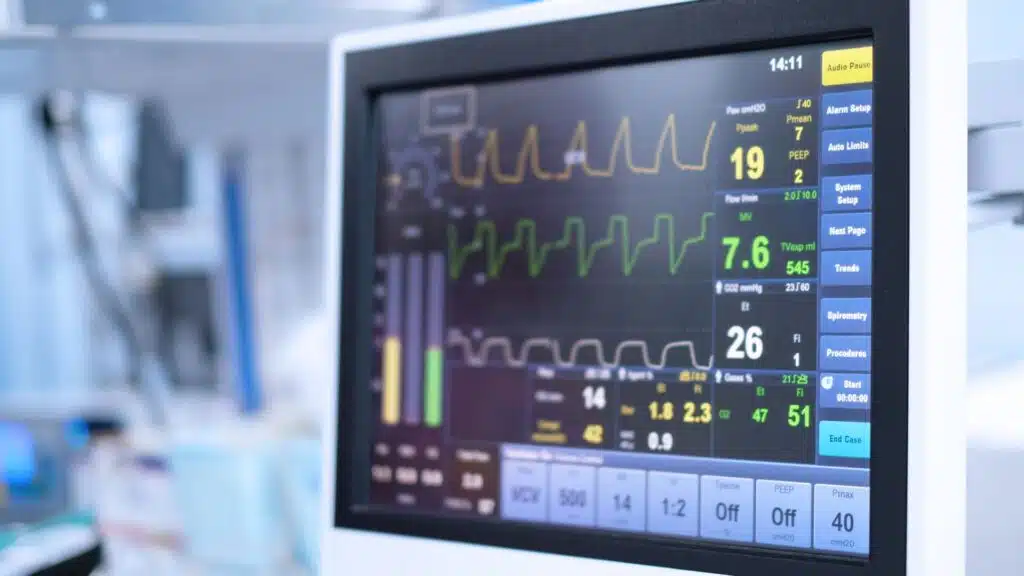
- Mechanical ventilation for those who cannot breathe without support, and the respiratory therapy, suctioning, and monitoring that ventilator dependence requires
- A hospital-grade bed
- A power wheelchair
- The adaptive communication technology, such as eye-tracking software and speech-generating devices, that can allow your loved one to express themselves and participate in decisions about their own life
Beyond equipment, ongoing care involves physical and occupational therapy to prevent complications like pressure injuries and contractures, regular specialist visits, laboratory work, and prescription management. The home itself often requires significant modification, such as widened doorways, roll-in showers, ramp access, and, in many cases, purpose-built accommodations that a standard renovation cannot provide.
Families who take on any portion of this care directly—and many do—absorb not only the physical and emotional weight of that role, but real financial costs: lost wages, reduced hours, career interruption, and the long-term economic consequences that follow.
The Cost of Care
The financial burden of locked-in syndrome is substantial by any measure, and it compounds over time. A person diagnosed in their forties may require five decades of full-time specialized care. The numbers below reflect typical annual and lifetime costs, though individual circumstances—the level of care required, insurance coverage, geographic location, and life expectancy—will affect what a family actually faces.
| Type of Care | Estimated Cost in Nevada |
| Private duty nurse (hourly rate) | $100/hour |
| Private duty nurse (visit rate) | $165/visit |
| Long-term care facility, e.g., nursing home (semi-private room) | $141,438/year |
| Long-term care facility, e.g., nursing home (private room) | $173,558/year |
Source: Genworth
These figures are why compensation matters. A settlement or verdict in a locked-in syndrome case is not a windfall; it is an attempt to account for what a lifetime of care genuinely costs, and to ensure that your loved one receives that care without the family exhausting every resource they have trying to provide it.
Talk To Our Legal Team Today
We’re here to answer your questions and help you understand your options.
Schedule a Free Consultation
What a Legal Review Can Reveal About Your Loved One’s Care
Not every devastating outcome is the result of negligence. Some locked-in syndrome cases result from strokes, traumatic brain injuries, or other events that could not have been prevented, regardless of the care provided. We recognize that, and we will tell you honestly if the evidence doesn’t support a claim.
But in many cases, what happened in the hours before the diagnosis or the days after matters enormously.

When Negligence May Have Contributed
Locked-in syndrome most commonly results from a brainstem stroke, and stroke treatment is acutely time-sensitive. When that window closes, so does much of the opportunity to limit permanent damage.
Negligence may be a factor when a hospital fails to recognize stroke symptoms promptly, when a patient is evaluated but not treated within the appropriate timeframe, or when a facility lacks the capability to provide emergency stroke care and fails to transfer the patient quickly to one that does. When that transfer takes too long, the results can be catastrophic.
Nevada’s door-in-door-out times are lower than most other states (98 to 118 minutes for acute ischemic stroke eligible for endovascular therapy and 168 to 193 minutes for other acute ischemic stroke, according to JAMA), but they are still higher than the American Heart Association guidance. Per the AHA, at least 50% of transfers should be completed within 90 minutes.
Other scenarios that may involve negligence include:
- Failure to act on early warning signs like sudden severe headache, double vision, or loss of coordination
- Premature discharge before a patient was stable
- Medication errors affecting blood pressure or clotting
Misdiagnosis of Locked-In Syndrome
Locked-in syndrome is sometimes misidentified as a coma or vegetative state, particularly in the early hours after a brainstem event when formal evaluation is rushed or incomplete.
The distinction matters clinically and legally. A person in a vegetative state has no awareness. A person with locked-in syndrome does. When that difference goes unrecognized, it affects the care they receive, the decisions made on their behalf, and the dignity they are afforded. It is often family members, not clinicians, who first notice their loved one tracking movement with their eyes or responding to questions with a blink. When those observations are dismissed, and a patient goes undiagnosed, that failure may constitute negligence in its own right.
A legal and medical review can help your family understand what the records show, whether the care provided met the applicable standard, and whether what happened to your loved one was preventable. That review begins with a free consultation—a conversation with no obligation—about what your family experienced and what the evidence may indicate.
Let Our Nevada Team Help You Find Answers
Your family doesn’t have to figure this out alone. If you have questions about what happened or what your options may be, Newsome Law is here to help you find answers. Reach out whenever you’re ready; consultations are free, confidential, and come with no obligation of any kind.
What Our Clients Say
Real stories from families we've helped through difficult times.
 5.0
5.0
Newsome Law are fantastic! They have been working on my case for the past 3+ years and I have not once had a bad experience with anyone who works there. They have worked tirelessly to help me through my accident and the medical bills that loomed overhead. I am extremely pleased and grateful to have them, fighting on my side during this period in my life.
5.0
Selecting a Law Firm in a time of tragedy , is one of the most important decisions you will make in your lifetime. There are so many Firms out there that will chase you down , make unrealistic commitments and set unrealistic expectations. This is the last thing that is needed in such a painful and difficult time
Newsome Law Is a step above all the rest. They are not some run-of-the-mill Firm. But rather an experienced Team of established excellence and success. As one of Newsome Law’s grateful clients, they always operated in the best interest of my family. Were always available to take my call , and were compassionate to the pain and needs of my family. Newsome Law is the right Firm for you to choose.
5.0
5 Stars???!!!! These guys deserve the universe!!!!!!! They came through with every promise and were professional, diligent, smart, friendly, and understanding of the situation I was going through every step of the way. Very happy with the customer service so if that’s a thing for you, that’s another reason to go here. Honestly you will be making a mistake if you don’t go here. Rich is top tier in the US for attorneys and he definitely fought hard to get the job done here. If you want your money… GO HERE!!!!!!!
5.0
Newsome Law represented me in a very positive manner. Always professional, courteous, supportive and attentive. They were always able to keep me apprised of the status of my case. The team on my case were always easy to work with and on top of all issues. I never had to wonder where we were at in the process. I would recommend them to anyone needing this type of help in the future.
5.0
Just an amazing experience with the Newsome Law firm. Our case was very sensitive and close to our hearts. We were treated with the utmost respect for our situation and everything was handled in a professional and timely manner. We cannot say enough good things about the entire team!
5.0
I am so pleased to have worked with this firm. The attention to detail, time spent one on one, not feeling like I was just a number and someone truly caring about what was going on with me and my case was more than I could have ever hoped for. I will use this firm again if I ever need one and will recommend to everyone who asks to reach out to Newsome Law if they find they ever need someone to represent them. More than pleased and happy with everyone and everything from the office. Thank you from the bottom of my heart!
5.0
I am so pleased to have worked with this firm. They went above and beyond for my sons case. I would highly recommend this firm to anyone. Always communicated with us, always answered all our questions and fought for my sons case to get the best. Newsome Law thank so much again for all you did. God Bless!
5.0
Partnered with this law firm under unfortunate circumstances and ended up being a great success. They understood the mission and intent, and collectively, conducted all of the behind the scenes work, resulting in a successful end result. If you want one of the best, here’s your opportunity and highly recommended.
5.0
When you’re in a hospital bed all jacked up from an accident and you google best personal injury attorneys, this is who you will find, and they are. Never had been in a lawsuit before and had never needed an attorney. They took such amazing care of me, and handled everything so professionally. A great team of paralegals and attorneys. Thank you so much guys.
Need to Speak with Someone New
Our lines are open 24/7. Call us anytime for immediate assistance.
Call Now: (407) 648 5977