What Locked-In Syndrome Actually Demands and What It Costs in Kansas
Locked-in syndrome most often results from damage to the brainstem, typically caused by stroke. The brain remains largely intact and functioning, which is what distinguishes it from a coma or vegetative state, but the pathways that control voluntary movement are severed. In most cases, the only movement preserved is vertical eye movement and blinking.
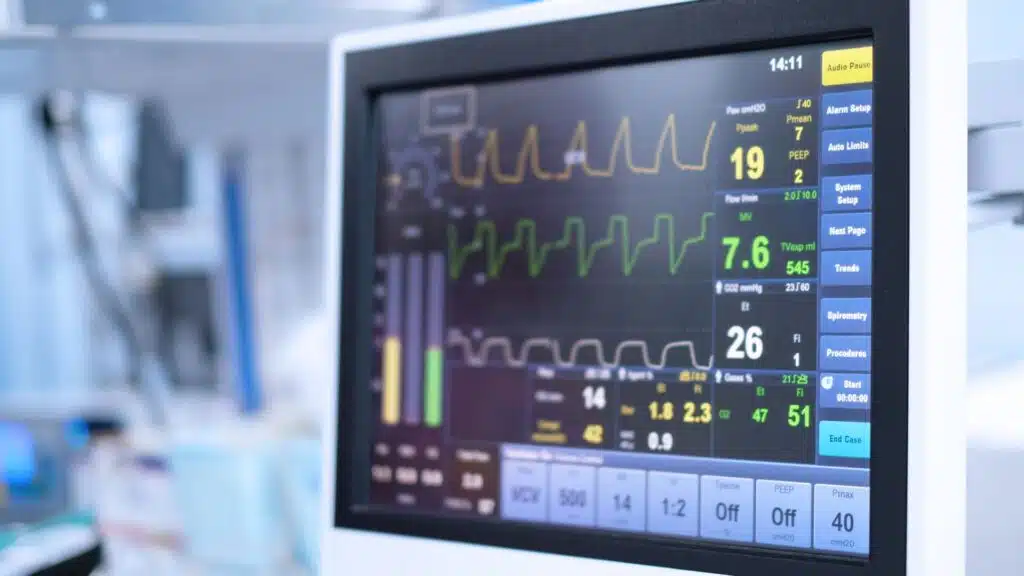
That means your loved one will require continuous, highly specialized care for the rest of their life. We’re talking about ventilator support, feeding tubes, positioning protocols to prevent pressure injuries, communication devices, and round-the-clock skilled nursing every single day. Many families eventually transition to a long-term care facility, though some maintain care at home with professional nursing support.
None of this is inexpensive.
| Type of Care | Estimated Cost in Kansas |
| Private duty nurse (hourly rate) | $67/hour |
| Private duty nurse (visit rate) | $138/visit |
| Long-term care facility, e.g., nursing home (semi-private room) | $104,025/year |
| Long-term care facility, e.g., nursing home (private room) | $108,770/year |
Source: Genworth
For someone who may live decades with this condition—and many people with locked-in syndrome do, with proper care—these numbers compound into a financial burden that most families cannot absorb without legal recourse.
Our Process
We guide you through every step with clear communication and compassionate support.


Free Consultation
Call us anytime to discuss your case. We listen carefully and answer all your questions with no obligation.

Medical Review
Our team conducts a thorough investigation with qualified medical experts to determine if malpractice occurred.

Legal Action
If we find evidence of negligence, we build a strong case and handle all legal aspects on your behalf.

Secure Recovery
We fight to secure the financial resources your family needs for long-term care and peace of mind.
When a Medical Failure May Be Behind It
Not every case of locked-in syndrome involves negligence. Some strokes happen without warning, are recognized immediately, and are treated correctly, and the outcome is still devastating. We understand that, and we will tell you honestly if that appears to be your situation.
But in a significant number of cases, the trajectory was shaped by something that should not have happened. Our team looks for the following:
Delayed Diagnosis or Failure to Diagnose or Recognize Stroke
Brainstem strokes can present atypically, with dizziness, slurred speech, or sudden imbalance rather than the classic one-sided weakness. These symptoms are sometimes dismissed, attributed to another cause, or not acted on with appropriate urgency.
Misdiagnosis of the Condition Itself
Locked-in syndrome is frequently mistaken for coma or vegetative state, sometimes for extended periods. The person cannot speak or move, so without specific evaluation of eye movement and awareness, the error can persist. Families are often the first to notice that something is different, such as their loved one tracking them with their eyes or responding to sound. When medical staff fail to conduct or properly interpret the necessary assessments, diagnoses are delayed and so is appropriate care.
Failure to Transfer to a Higher Level of Care
If a hospital lacked the capability to treat a major stroke, particularly one requiring endovascular intervention, and did not transfer the patient quickly enough, that delay may have been the determining factor in the outcome.
In stroke cases, minutes genuinely determine outcomes. Once blood flow to the brainstem is cut off, the window for intervention is narrow, and the consequences of delay are permanent. A landmark study published in JAMA examined interhospital transfer times for stroke patients across the country, measuring how long it took for patients to be stabilized at one hospital and transferred to a facility with advanced stroke care. The nationwide median guideline is less than 120 minutes, set by the Joint Commission and the Brain Attack Coalition. Kansas’ time is just under that at 98 to 118 minutes.
However, Kansas is a largely rural state. For families outside the Kansas City metro or Wichita, reaching a comprehensive stroke center can require transfer across significant distances. When those transfers are delayed or when initial treatment is inadequate at a smaller facility, the chance of meaningful recovery narrows.
Premature Discharge or Ignored Warning Signs
Sometimes patients with transient symptoms are sent home before a full workup, only to return days later with a completed stroke. Other times, documented warning signs in the chart are not acted on by the treating team.
A legal and medical review looks at the full record: the timeline, the clinical decision-making at each step, what the standard of care required, and where any gaps occurred. That review is what determines whether a case exists and what it is worth pursuing.
If you have questions about what happened to your loved one, a consultation costs you nothing. We’ll listen carefully and tell you what we think.
Talk To Our Legal Team Today
We’re here to answer your questions and help you understand your options.
Schedule a Free Consultation
How We Work—and What We’re Working Toward
Our Kansas stroke misdiagnosis lawyers begin our work together by listening. The family’s account of what happened often contains details that records alone won’t reveal. From there, we request and review all relevant medical records, imaging, and documentation. We work with physicians who specialize in the relevant areas of medicine, including neurology and critical care, to evaluate the care your loved one received against established standards.
Our locked-in syndrome attorneys take this work seriously, and we take the time it requires. If the evidence does not support a negligence claim, we will tell you plainly. That honesty matters to us.

What a Successful Outcome Can Provide
When we fight to secure compensation for a family, it is designed to address the full scope of what locked-in syndrome requires. That includes:
- Lifelong care, including skilled nursing, facility costs, therapies, and equipment
- Lost income for both the person injured and, often, a family member who has stepped away from work to provide care
- Pain and suffering
- Loss of independence
- Loss of the life that was expected
- Quality-of-life accommodations that allow your loved one to communicate, engage, and maintain as much connection as possible
This is not about a payout. It is about financial security for the rest of your loved one’s life and the ability for your family to make decisions about their care without being constrained by what you can afford.
What Working with Us Looks Like
You will have direct access to the attorneys on your case. You won’t need to rely on a paralegal as the only point of contact. You will have actual access to the people doing the work. We remain closely involved with families throughout the process, and we understand that behind every case is a family under enormous strain.
Can I Afford Help from a Locked-In Syndrome Attorney?
There is no upfront cost to working with Newsome Law. We handle locked-in syndrome cases on a contingency fee basis, which means we are paid only if we recover compensation for your family. If we don’t win, you owe us nothing.
Our consultations are free and confidential. There is no obligation to move forward, and no pressure to make any decisions immediately. Many families reach out while they are still trying to understand what happened; that is exactly the right time to call.
Start Your Search for Answers
If your family is ready to talk, we are here. We can help you find the answers you are looking for and explore your options after you get those answers.
Call Newsome Law whenever you are ready.
What Our Clients Say
Real stories from families we've helped through difficult times.
 5.0
5.0
Newsome Law are fantastic! They have been working on my case for the past 3+ years and I have not once had a bad experience with anyone who works there. They have worked tirelessly to help me through my accident and the medical bills that loomed overhead. I am extremely pleased and grateful to have them, fighting on my side during this period in my life.
5.0
Selecting a Law Firm in a time of tragedy , is one of the most important decisions you will make in your lifetime. There are so many Firms out there that will chase you down , make unrealistic commitments and set unrealistic expectations. This is the last thing that is needed in such a painful and difficult time
Newsome Law Is a step above all the rest. They are not some run-of-the-mill Firm. But rather an experienced Team of established excellence and success. As one of Newsome Law’s grateful clients, they always operated in the best interest of my family. Were always available to take my call , and were compassionate to the pain and needs of my family. Newsome Law is the right Firm for you to choose.
5.0
5 Stars???!!!! These guys deserve the universe!!!!!!! They came through with every promise and were professional, diligent, smart, friendly, and understanding of the situation I was going through every step of the way. Very happy with the customer service so if that’s a thing for you, that’s another reason to go here. Honestly you will be making a mistake if you don’t go here. Rich is top tier in the US for attorneys and he definitely fought hard to get the job done here. If you want your money… GO HERE!!!!!!!
5.0
Newsome Law represented me in a very positive manner. Always professional, courteous, supportive and attentive. They were always able to keep me apprised of the status of my case. The team on my case were always easy to work with and on top of all issues. I never had to wonder where we were at in the process. I would recommend them to anyone needing this type of help in the future.
5.0
Just an amazing experience with the Newsome Law firm. Our case was very sensitive and close to our hearts. We were treated with the utmost respect for our situation and everything was handled in a professional and timely manner. We cannot say enough good things about the entire team!
5.0
I am so pleased to have worked with this firm. The attention to detail, time spent one on one, not feeling like I was just a number and someone truly caring about what was going on with me and my case was more than I could have ever hoped for. I will use this firm again if I ever need one and will recommend to everyone who asks to reach out to Newsome Law if they find they ever need someone to represent them. More than pleased and happy with everyone and everything from the office. Thank you from the bottom of my heart!
5.0
I am so pleased to have worked with this firm. They went above and beyond for my sons case. I would highly recommend this firm to anyone. Always communicated with us, always answered all our questions and fought for my sons case to get the best. Newsome Law thank so much again for all you did. God Bless!
5.0
Partnered with this law firm under unfortunate circumstances and ended up being a great success. They understood the mission and intent, and collectively, conducted all of the behind the scenes work, resulting in a successful end result. If you want one of the best, here’s your opportunity and highly recommended.
5.0
When you’re in a hospital bed all jacked up from an accident and you google best personal injury attorneys, this is who you will find, and they are. Never had been in a lawsuit before and had never needed an attorney. They took such amazing care of me, and handled everything so professionally. A great team of paralegals and attorneys. Thank you so much guys.
Need to Speak with Someone New
Our lines are open 24/7. Call us anytime for immediate assistance.
Call Now: (407) 648 5977