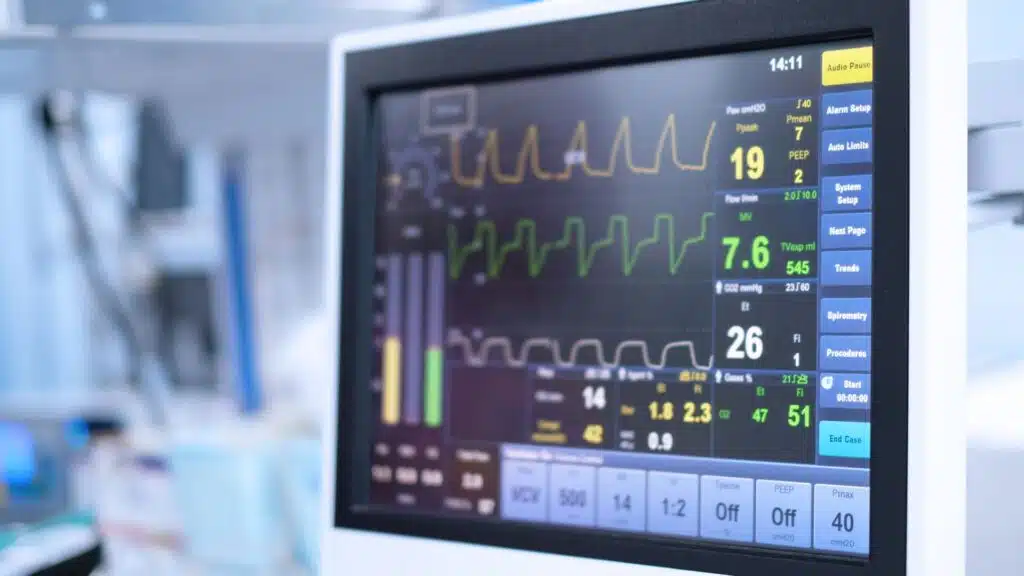

Tracheostomy & Ventilator Management
A tracheostomy and a ventilator can feel like foreign objects at first: tubes, machines, and sounds that take over a...

Locked-In Syndrome (LIS) is a neurologic emergency most often caused by stroke. It leaves a person conscious and aware but unable to move or speak, typically with only limited eye movement preserved. For families, the experience is disorienting and frightening.

Legally Reviewed By
Attorney Rich Newsome
Catastrophic Injury & Medical Malpractice Attorney
25+ years experience

When this condition is missed or misdiagnosed, the consequences can be profound: medically, emotionally, and, in some cases, legally. This article explains how misdiagnosis can occur, what its consequences may be, and how families and Locked-In Syndrome attorneys can approach questions about accountability with care and perspective.
Locked-In Syndrome most commonly results from a stroke affecting the brainstem, particularly the pons. Because motor pathways are disrupted while consciousness is preserved, patients may appear unresponsive despite being awake and aware. This creates a diagnostic challenge.
Early signs can be subtle:
In fast-moving clinical environments, these signs can be mistaken for coma, vegetative state, or severe encephalopathy. Without careful neurological assessment, opportunities to recognize awareness may be missed, and it is frequently up to family members to alert providers about possible signs of consciousness.
Not every missed or delayed diagnosis is the result of negligence. Medicine involves uncertainty, especially in complex neurological presentations. However, certain breakdowns can contribute to diagnostic error:
A misdiagnosis may persist for days, weeks, or longer. During that time, a patient may be treated as though they lack awareness, despite being conscious. This feeling of utter powerlessness is horrific and, in some cases, completely preventable.
In some cases, families begin to ask whether the care provided met appropriate medical standards. They want—and have a right—to understand what happened and whether different care could have changed the course of events.
A legal review typically focuses on questions such as:
Importantly, not all misdiagnoses are malpractice. The legal standard generally considers whether the care provided was consistent with what reasonably competent providers would have done under similar circumstances.
A thorough review is grounded in medical evidence, not assumptions. It often involves:
In many cases, the findings clarify that the care was appropriate given the circumstances. In others, they may reveal missed opportunities or preventable delays. Either way, simply knowing the truth is a source of comfort and relief for many families.
When a misdiagnosis is determined to fall below the accepted standard of care, there may be legal consequences. These are typically addressed through civil claims focused on harm and recovery.
Responsibility may rest with:
Often, cases involve a combination of individual and institutional factors.
Any financial recovery is intended to provide resources for ongoing needs. In cases involving Locked-In Syndrome, those needs can be substantial:
The focus remains on preserving dignity, improving quality of life, and ensuring stability for the future.
The impact of misdiagnosing Locked-In Syndrome affects both the patient and their families.
A person with Locked-In Syndrome retains awareness. When that awareness is not recognized, the experience can be isolating. Patients may be unable to express pain, needs, or preferences. They may hear conversations about their condition without being able to respond.
Clear recognition of consciousness allows for:
Families rely on accurate information to make decisions. A misdiagnosis may lead to:
The realization that a loved one may have been conscious but unable to communicate can be particularly difficult.
If questions arise about a possible misdiagnosis, families can take measured, constructive steps:
Request complete records from all treating facilities, including physician notes, nursing documentation, imaging reports, and consultation records.
Document key events, such as the onset of symptoms, hospital admission and evaluations, and changes in diagnosis or condition.
Family members are often the first to notice subtle signs of awareness. Documenting your observations—and the provider’s response to them—can be helpful.
Original scans and test data may be important for independent review.
Before drawing conclusions, it can be helpful to ask treating providers for explanations of what occurred and why.
Families facing Locked-In Syndrome are navigating both medical and emotional uncertainty. Legal questions, when they arise, are just one part of that broader experience.
The right support often includes:
Any next step should be controlled by the family. There is no requirement to act quickly or pursue a claim. Taking time to understand the situation is both reasonable and appropriate.
Having questions is normal, but the weight of the unknown can be crushing. Our legal team is always here to address your concerns and provide tailored advice. We can answer all of your questions, including the following.
Malpractice cases require detailed medical review, including expert analysis of neurological findings, imaging, and timing. The distinction between a difficult diagnosis and a preventable error is not always straightforward.
If your loved one was left undiagnosed for an unreasonably long time, you have the option of taking action against anyone that a legal review finds negligent. This could include both individual providers and entire healthcare institutions.
It is helpful to begin gathering information early, but families can move at their own pace. A careful, informed approach is just as important as timely action.
Locked-In Syndrome challenges assumptions about consciousness and communication. When it is not recognized, the consequences can be deeply personal and far-reaching.
For families, the priority is often understanding: what happened, what it means, and what comes next. Legal questions, when they arise, should be approached with the same care. If you are navigating this situation, know that seeking clarity is a reasonable and important step. You remain in control of what happens next. Newsome Law is here to provide guidance and support whenever you want it.
A tracheostomy and a ventilator can feel like foreign objects at first: tubes, machines, and sounds that take over a...

Locked-in syndrome (LIS) changes everything overnight, including a family's finances. Once income stops, Social Security disability benefits can become a...

Learning your child has locked-in syndrome can feel like standing in a room with no map. It's a rare diagnosis,...

While there are occasional cases that make the news of someone recovering from locked-in syndrome or a similar diagnosis, this...

The area of the brain that can cause locked-in syndrome (the pons) following a stroke is the same area of...

Because it causes near-global paralysis, takes away the ability to speak, and prevents a person from providing self-care, locked-in syndrome...

Locked-in syndrome occurs when an injury to the brainstem prevents the brain from communicating with the spinal cord and the...
Some people diagnosed with locked-in syndrome continue to feel pain and retain sensation throughout their body or in limited areas...