
Tracheostomy & Ventilator Management
A tracheostomy and a ventilator can feel like foreign objects at first: tubes, machines, and sounds that take over a...

Locked-in syndrome is frequently permanent, though outcomes vary by type. Incomplete LIS offers the greatest potential for partial motor recovery, while classical LIS rarely improves significantly. Total LIS carries the poorest prognosis. Regardless of type, most patients require lifelong medical support, assistive technology, and coordinated multidisciplinary care. Early, realistic goal-setting is essential to align treatment intensity with the patient’s values and quality-of-life priorities.

Legally Reviewed By
Attorney Rich Newsome
Catastrophic Injury & Medical Malpractice Attorney
25+ years experience

The medical management of locked-in syndrome is intensive and lifelong. Because the brainstem injury underlying LIS disrupts voluntary motor control while leaving most autonomic and cognitive functions intact, patients remain aware of, and vulnerable to, a wide range of physical complications. Preventing secondary deterioration while maintaining systemic stability forms the foundation of all long-term care planning.
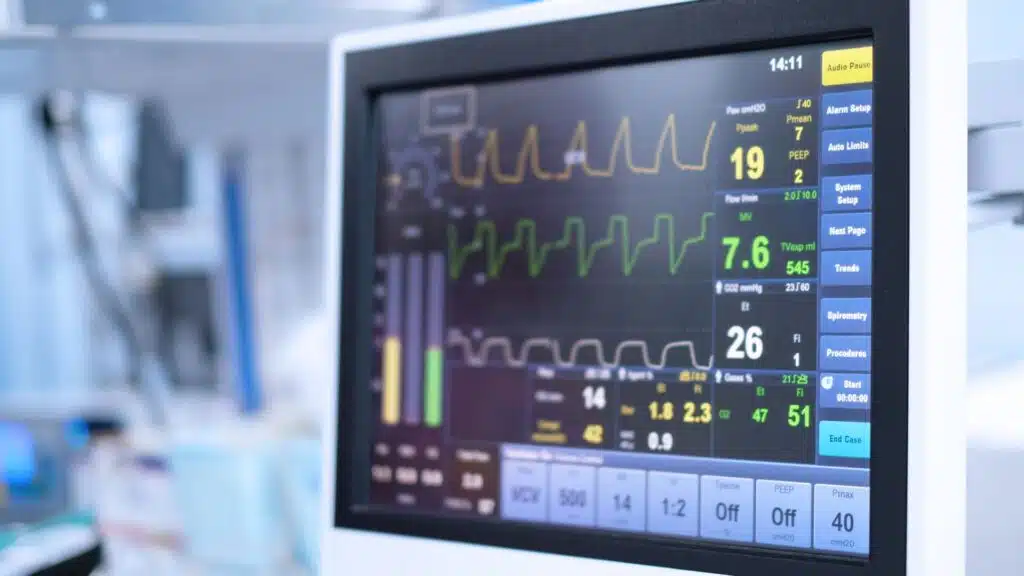
Most LIS patients depend on mechanical ventilation via tracheostomy to breathe. Long-term management includes:
Dysphagia is near-universal in LIS, making oral feeding unsafe for most patients. Percutaneous endoscopic gastrostomy (PEG) tubes are the standard intervention, with ongoing monitoring for tube patency (i.e., ensuring the tube is connected securely, clean, and free of obstructions), infection, and nutritional adequacy by a registered dietitian.
Immobility creates significant risk for:
Repositioning schedules, blood thinners, range-of-motion therapy, and bowel/bladder protocols are core components of daily care.
Spasticity affects a substantial portion of LIS patients and can cause significant discomfort and functional limitation. Management includes physical therapy, baclofen (oral or via a surgically inserted pump), and botulinum toxin injections. Importantly, many patients can still feel pain and other sensations, meaning pain assessment aided by communication tools must be routine and taken seriously.
Reduced or absent spontaneous blinking places patients at high risk for corneal damage and dry eye syndrome. Lubricating eye drops, protective eyewear, and regular ophthalmologic review are essential, particularly since the eyes are often the patient’s primary means of communication.
LIS patients require the same preventive care as the general population, including:
These are easily deprioritized in complex care environments and require deliberate inclusion in care plans.
Choosing the right care setting is one of the most consequential decisions families and care teams face after a LIS diagnosis. The optimal environment depends on the patient’s medical complexity, communication ability, family capacity, financial resources, and—critically—the patient’s own preferences. There is no universally correct answer, and the decision should be revisited as circumstances evolve.
For many patients and families, home care is the preferred option, and research suggests it can support a strong quality of life when adequately resourced. Successful home care typically requires:
The emotional rewards for both patient and family can be significant, but caregiver burnout is a serious and persistent risk that must be proactively managed.
Skilled nursing facilities can provide around-the-clock medical supervision and are often more feasible when the patient’s needs exceed what a family can manage at home. Quality varies considerably, and families should specifically evaluate a facility’s experience with ventilator-dependent or minimally mobile patients, staff-to-patient ratios, and willingness to accommodate AAC devices and individualized communication protocols.
LTACHs serve patients who remain medically complex beyond the typical acute hospital stay. They bridge the gap between ICU-level care and skilled nursing, offering respiratory therapy, wound care, and rehabilitation services under one roof. They are often a transitional setting rather than a permanent one, though some patients remain long-term.
Some rehabilitation centers have dedicated neurology or acquired brain injury units with staff experienced in LIS and related conditions. These settings can be particularly valuable early in the post-acute phase, when communication systems are being established, assistive technology is being fitted, and realistic long-term goals are being defined.
Traditional assisted living is rarely equipped to meet the needs of LIS patients without substantial supplementation. However, in some cases, particularly for patients with incomplete LIS and greater retained function, assisted living facilities with added private-duty nursing or home health support may offer a middle ground between full nursing home placement and independent home care.
When goals shift from life prolongation to comfort and quality of remaining life, inpatient palliative care units or home hospice become appropriate options. Hospice can provide valuable symptom management, emotional support, and family relief at any stage of the illness trajectory.
Caring for a loved one with locked-in syndrome places extraordinary demands on families, emotionally, physically, and financially. Because patients are cognitively intact and fully aware of their situation, caregivers carry the added weight of maintaining meaningful connection and honoring personhood, not simply managing medical tasks.
Caregiver burnout is common and should be screened for regularly by the care team. Respite care, whether through temporary facility placement, volunteer programs, or rotating family involvement, is not a luxury but a clinical necessity. Vital outlets can include:
Family members also require practical training in ventilator management, suctioning, feeding tube care, repositioning, and AAC device operation. This training should be ongoing rather than a one-time discharge checklist.
Financial strain is substantial, as costs of care can easily top $100,000 in a single year. Social workers and case managers play a key role in connecting families to disability benefits, grant programs, and insurance navigation. Sustaining caregiver health is ultimately inseparable from sustaining quality patient care.
A locked-in syndrome diagnosis reshapes every aspect of life for patients and families alike. While long-term care demands are significant, informed planning and strong support systems can meaningfully preserve quality of life and dignity.
Unfortunately, affording the care necessary can feel impossible.
If your loved one’s diagnosis followed a medical event, we offer a free medical review to determine whether negligence played a role. If it did, you have options to hold responsible parties accountable. Our locked-in syndrome lawyers can help you explore them. Contact Newsome Law when you are ready to take that first step.
A tracheostomy and a ventilator can feel like foreign objects at first: tubes, machines, and sounds that take over a...

Locked-in syndrome (LIS) changes everything overnight, including a family's finances. Once income stops, Social Security disability benefits can become a...

Learning your child has locked-in syndrome can feel like standing in a room with no map. It's a rare diagnosis,...

While there are occasional cases that make the news of someone recovering from locked-in syndrome or a similar diagnosis, this...

The area of the brain that can cause locked-in syndrome (the pons) following a stroke is the same area of...

Because it causes near-global paralysis, takes away the ability to speak, and prevents a person from providing self-care, locked-in syndrome...

Locked-in syndrome occurs when an injury to the brainstem prevents the brain from communicating with the spinal cord and the...

Some people diagnosed with locked-in syndrome continue to feel pain and retain sensation throughout their body or in limited areas...