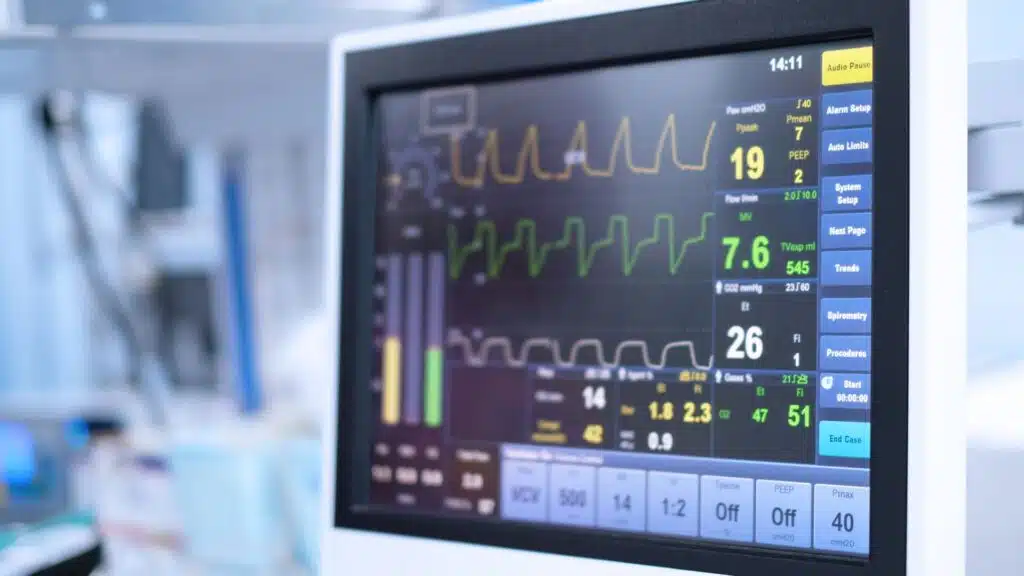

Tracheostomy & Ventilator Management
A tracheostomy and a ventilator can feel like foreign objects at first: tubes, machines, and sounds that take over a...


Legally Reviewed By
Attorney Rich Newsome
Catastrophic Injury & Medical Malpractice Attorney
25+ years experience

Patients with locked-in syndrome can hear you and may be able to respond. They typically have global paralysis, except for blinking and vertical eye movements. Some can answer yes or no questions by blinking or moving their eyes if you establish a code beforehand.
Today, those with locked-in syndrome may be able to use technology to aid in communicating. Advances in brain/computer interfaces even make it possible for those who cannot blink or move their eyes to answer yes or no questions.
When doctors first recognized locked-in syndrome (LIS) in the 1960s, the only way to communicate with someone with locked-in syndrome was to work out a code to answer yes or no questions using blinking or eye movements. This was tedious and tiring but allowed patients to communicate with the outside world.
It is through blinking his left eye, and with the help of a partner who recited the alphabet repeatedly, that French journalist Jean-Dominique Bauby was able to dictate his memoir, The Diving Bell and the Butterfly.
Others use clear boards and gaze at the intended letter to spell out words. Both methods are still common today, although easier communication methods are available for those who can afford the technology.
Today, there are additional ways for those with locked-in syndrome to communicate with those around them. Computers and technology have advanced quickly over the last few decades.
Modern options for communication with someone with locked-in syndrome may include:
Eye gaze devices track the patient’s eye gaze, utilizing their vertical eye movement to type on a virtual keyboard or navigate other screens. These devices are relatively common and allow users to surf the Internet, speak through an assistive device, and even type.
Head-mouse devices may work for those with incomplete locked-in syndrome or those who recover the movement of their head. These devices use head movement to move a computer mouse cursor, allowing the person to select letters on a speech device, type, or communicate online.
Known as EMG technology, electromyographic devices rely on implanted muscle fiber sensors to move a cursor, operate a switch, or do other simple tasks. This technology is best known for allowing Stephen Hawking to continue to communicate despite motor neuron disease.
This technology allows those with total locked-in syndrome to answer yes or no questions. This requires implanted electrodes to “read” the thoughts of the mind and translate them into words spoken by a digital device. Electroencephalographic (EEG) technology is one type of brain/computer interface currently available. Small advances in BCI technology may make a significant difference for patients with total locked-in syndrome.
Other types of communication require voluntary movement and therefore only work for those with the classic or incomplete types of locked-in syndrome.
For patients with total locked-in syndrome, communication without this type of technology is impossible. People with total/complete LIS cannot blink or move their eyes, so eye gaze devices or blink codes are useless. The promise of improving brain/computer interface technology is exciting for these patients and their families.
People with locked-in syndrome are aware of the world around them and cognitively intact. For this reason, it is vital that they establish some method of communicating with those around them to have a relatively high quality of life. The easier it is to communicate, the more fulfilling their life can be.
Modern technology has improved the quality of life for many people with locked-in syndrome. As technology continues to advance, patients can expect it to become even easier to communicate.
If a delayed diagnosis led to permanent harm, you may be entitled to compensation. Speak with our legal team today.
Start My Free Case Review
There are several things to keep in mind about this journey of communication.
Early attempts may involve long pauses, misread signals, and moments where both of you want to give up. That frustration is not a sign of failure. It is a normal part of learning a new language together. Mastering some level of communication will allow your loved one to interact with the people and decisions that shape their life. It can mean answering a question about their care, greeting a grandchild by name, or simply saying they are itchy before it becomes unbearable. These small exchanges add up to something larger: a restored sense of presence in their own life.
Even though your loved one cannot respond in the “traditional way,” they should still be included in discussions. Ask them what movie they want to watch for family movie night. Ask for their advice about a situation. Tell them about your day. When you are discussing their care, have them weigh in.
Don’t speak about them as if they aren’t there.
Communication through a board, blinks, or a device is slow by nature. Resist the urge to guess ahead or fill in words to speed things along. Let your loved one complete their own thought, even if it takes several minutes. Rushing them, however well-intentioned, can feel like being talked over.
A misread blink or a missed letter can send a conversation in the wrong direction entirely. Repeat back what you understood — “So you’re saying you want the window open?” — before acting on it. A few extra seconds of confirmation builds trust and spares both of you the frustration of correcting a mistake later.
If you use a letterboard to communicate with your loved one, put commonly used questions or complaints on it. Putting words like “thirsty,” “pain,” “hot,” “cold,” or “itchy” can allow you to meet your loved one’s needs quicker than if you had them spell them out while they are experiencing discomfort.
Some of these communication options are very affordable. Letterboards can cost as little as $10. Other options, such as electromyographic sensors and brain/computer interfaces, can cost several thousand dollars. This can be immensely stressful when you consider that your loved one needs this technology to voice their discomfort and connect with family and the outside world.
You may have several different options for affording this technology. One potential option is holding the medical provider or hospital system that failed to prevent your loved one’s condition liable.
The team from Newsome Law offers free case reviews for those dealing with a locked-in syndrome diagnosis. If a member of your family is locked-in, you can call us today on their behalf. Patients may be eligible to pursue compensation for their medical care, ongoing care costs, communication devices, pain and suffering, and more.
Our locked-in syndrome attorney can review your case and identify whether someone else’s negligence played a role in your loved one’s condition. If so, we may be able to hold them liable. Let us review the case for free. We can take on even the most complex civil litigation if necessary, to pursue the compensation you and your family deserve.
A tracheostomy and a ventilator can feel like foreign objects at first: tubes, machines, and sounds that take over a...

Locked-in syndrome (LIS) changes everything overnight, including a family's finances. Once income stops, Social Security disability benefits can become a...

Learning your child has locked-in syndrome can feel like standing in a room with no map. It's a rare diagnosis,...

While there are occasional cases that make the news of someone recovering from locked-in syndrome or a similar diagnosis, this...

The area of the brain that can cause locked-in syndrome (the pons) following a stroke is the same area of...

Because it causes near-global paralysis, takes away the ability to speak, and prevents a person from providing self-care, locked-in syndrome...

Locked-in syndrome occurs when an injury to the brainstem prevents the brain from communicating with the spinal cord and the...
Some people diagnosed with locked-in syndrome continue to feel pain and retain sensation throughout their body or in limited areas...