
Why We Take on Locked-In Syndrome Cases
There is a particular kind of fear that comes with locked-in syndrome—not just for the person living with it, but...


Legally Reviewed By
Attorney Rich Newsome
Catastrophic Injury & Medical Malpractice Attorney
25+ years experience

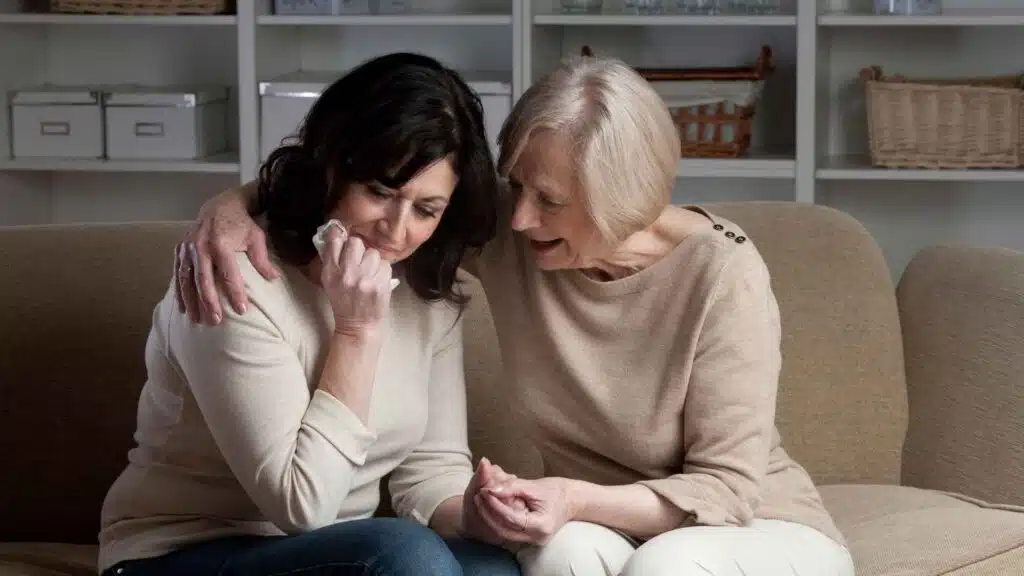
Every family living with locked-in syndrome (LIS) teaches us something new about resilience. Locked-in syndrome most often follows a stroke affecting the brainstem, and while the patient’s awareness remains intact, the people surrounding that patient carry a weight of their own. Over years of walking beside these families, certain truths have become clear: caregiving is not a single emotion or a single trail to follow, but a shifting current of many, and no one should have to navigate it without guidance.
Caregivers move through fatigue, burnout, resentment, guilt, and grief—often within the same day, sometimes within the same hour. None of these states is a sign of failure. They are simply what it looks like to love someone through something this hard.
Caregiving asks something different of every person who takes it on, but the emotional terrain tends to look familiar from family to family: exhaustion that sleep doesn’t fully answer, flashes of anger at a situation no one chose, tenderness that hasn’t dimmed, and a low hum of sorrow underneath all of it. Caregivers are not saints or martyrs. They are people doing something enormous, and the toll it takes is real.
Much of that toll comes from the sheer physical and mental load. Nights are shorter. Attention rarely fully rests, even during quiet moments, because something might need tending. Caregivers describe a particular kind of tiredness that doesn’t lift with a good night’s sleep, because it isn’t only physical; it’s the tiredness of always being needed. Left unattended, that kind of exhaustion doesn’t stay contained; it eventually touches the quality of care itself.
Guilt tends to arrive uninvited and stay too long. A caregiver might feel guilty for wanting an evening off, for snapping from exhaustion, or for grieving a life that used to look different. These feelings often travel together—a flash of frustration followed almost immediately by shame for having felt it at all.
There are practical pressures too. Work schedules must bend around medical needs. Household budgets absorb costs no one planned for. Other family members, including children, sometimes get less attention than they once did. Caregivers frequently describe a sense that their own plans and ambitions have been quietly set aside—not abandoned, just paused indefinitely.
And beneath everything runs grief: for the relationship as it used to be, for shared routines that no longer fit, and for a future that now looks different than imagined. What we’ve seen, again and again, is that grief and love are not opposites. One caregiver put words to this when she said, “I miss the man who used to dance with me. But I have learned to love the man who smiles at me with his eyes.”
We’ve also seen how small moments of honesty change everything. One caregiver finally told a close friend, plainly, that she loved her husband and was running on empty. That single admission led to a rotation of family members stepping in to give her real rest—rest she hadn’t allowed herself to ask for directly. Another caregiver said her resentment out loud for the first time in a support group meeting, and instead of judgment, found other people nodding along, relieved to hear someone else say it first.
None of this describes a person failing at caregiving. It describes what caregiving actually involves: vulnerability alongside strength, exhaustion alongside devotion, and a kind of grace that isn’t about never struggling, but about continuing to show up anyway.
Accepting help is a skill, and like any skill, it takes practice to build. Many caregivers are used to being the one who gives, not the one who receives, and that instinct can make it hard to say yes when someone offers to sit with a loved one, cook a meal, or simply listen. Learning to accept that help is not a step back. It is what allows caregivers to keep going.
Guilt is not a flaw. It is a natural companion to caregiving, arising precisely because caregivers care so much. Feeling frustrated, feeling depleted, or wanting an hour to yourself—none of this means love is absent. It means the caregiver is carrying something heavy and is still, in spite of it, showing up.
Part of this journey is finding new realities: new definitions of connection, new rhythms for the family, new ways of measuring a good day. The life a family once imagined may no longer be available to them, but a full life, built on different terms, still is.
Caregivers cannot control the storm of emotions that comes with this path. What they can hold onto is this: the winds will shift. A hard day is not a permanent forecast. Grief and gratitude and exhaustion and love can exist side by side, and neither one erases the other.
If a delayed diagnosis led to permanent harm, you may be entitled to compensation. Speak with our legal team today.
Start My Free Case Review
Caregiving was never meant to be done by one person alone. The families who fare best tend to be the ones who let others in—relatives who take a shift, friends who show up with dinner, congregations or communities that check in without being asked, and support groups where other caregivers simply understand without needing an explanation.
There’s also real value in professional support that goes beyond medical care for the patient. Counselors can help caregivers work through grief and chronic stress in a structured way. Social workers often know where to find financial assistance or practical resources that families wouldn’t discover on their own. Respite care, in particular, deserves to be seen clearly: it isn’t a treat or an extravagance. It’s what makes ongoing caregiving sustainable at all.
Self-care deserves the same clear reframing. It isn’t selfish, and it isn’t optional; it’s maintenance. These small acts restore capacity rather than draining it.
For many caregivers, prayer, meditation, or quiet reflection serves the same purpose, offering a place to set down the weight for a few minutes.
The clearest message we can offer here: tending to yourself is not a betrayal of the person you’re caring for. It’s what keeps you able to care for them at all.
See “The Caregiver’s Journey” and “Support Systems and Self-Care” in our book, Locked-In Syndrome: A Guide for Families and Caregivers, for the fuller picture.
Emotional strain often arrives alongside financial strain, and families deserve a clear picture of what care can cost.
| Type of Care | Median Cost (National, 2025) |
| Non-medical caregiver | $35/hour |
| Private duty nurse | $90/hour |
| Assisted living community | $74,400/year |
| Nursing home, semi-private room | $114,975/year |
| Nursing home, private room | $129,575/year |
Source: Genworth
You don’t have to carry this alone. If you’d like support, download our free book on navigating locked-in syndrome, or reach out to a locked-in syndrome lawyer from our firm with questions about your family’s path forward. We also recommend Cecelia Williams’ 7-Day Reset for Caregivers Who’ve Lost Themselves, a resource built specifically for caregivers like you. Help is available whenever you’re ready for it.
There is a particular kind of fear that comes with locked-in syndrome—not just for the person living with it, but...

Locked-in syndrome is one of the most devastating conditions in medicine. A person's mind stays fully awake and aware, but...

Locked-in syndrome (LIS) strips away nearly everything—speech, movement, and even the ability to breathe unaided—while leaving the mind fully intact....

Caring for a loved one with complex medical needs is one of the most demanding roles a person can take...

Locked-in syndrome (LIS) is a condition where a person can't move or speak, but their mind stays fully awake and...

When someone is diagnosed with locked-in syndrome (LIS) due to an accident, medical error, or negligence, families want to know...

Every medical malpractice case is different, but every case must prove the same things. You must be able to prove...
Imagine going to the hospital because your sodium levels are dangerously low. Doctors fix it fast, but the treatment itself...