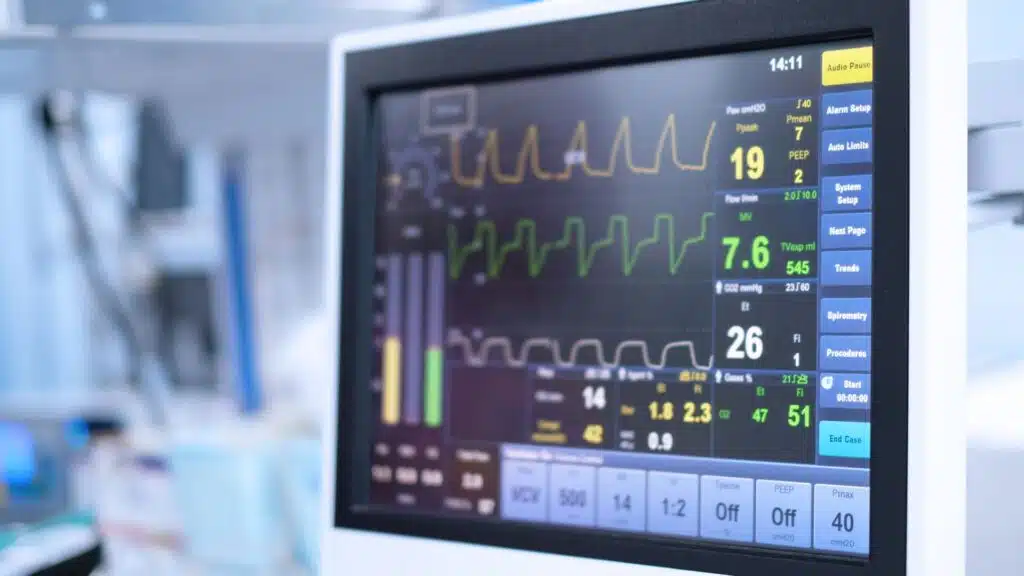

Tracheostomy & Ventilator Management
A tracheostomy and a ventilator can feel like foreign objects at first: tubes, machines, and sounds that take over a...


Legally Reviewed By
Attorney Rich Newsome
Catastrophic Injury & Medical Malpractice Attorney
25+ years experience

Locked-in syndrome (LIS) changes everything overnight, including a family’s finances. Once income stops, Social Security disability benefits can become a lifeline, but only if the claim is built the right way. Disability benefits aren’t automatic, and they can feel like guesswork. There are clear medical criteria for conditions this severe. This walkthrough explains what those criteria require, and how families and physicians can work together to meet them.
The Social Security Administration (SSA) doesn’t have a listing called “locked-in syndrome.” Instead, it can evaluate the condition through its underlying cause or the effect it has on the body.
In practice, this means the first task in any locked-in syndrome claim is identifying what caused it. Most cases arise from a stroke (a sudden interruption of blood flow to the brain), and these claims are evaluated under Social Security’s stroke-related medical listing. Others result from a traumatic brain injury and fall under a separate listing built for that cause. A smaller number involve communication loss from a non-neurological source, which Social Security accounts for under another listing.
None of this affects how seriously the SSA takes the underlying disability. What changes is simply which set of medical criteria the family’s documentation needs to speak to. Once that’s identified, the rest of the process becomes far more concrete: a matter of matching medical records to specific, well-defined requirements, rather than trying to prove something the system doesn’t already recognize.
The SSA’s stroke-related listing, 11.04, is where most families will find their claim evaluated. Listing 11.04 offers two paths, and a claim only needs to meet one.
Under 11.04A, the qualifying criterion is loss of effective speech or communication, called aphasia, following the stroke. Essentially, your loved one’s locked-in syndrome must cause an inability to convey basic messages for at least three consecutive months.
Under 11.04B, the criterion is severe loss of motor function: an inability to stand from a seated position, maintain balance, or use the arms and hands in a meaningful way for at least three consecutive months following the stroke.
Many families documenting locked-in syndrome will find that both criteria are met, though only one is required.
When locked-in syndrome follows a traumatic brain injury rather than a stroke, the SSA evaluates the claim under a separate listing, 11.18, built specifically for injury-related brain damage.
Listing 11.18 looks for either severe loss of motor function (i.e., an inability to stand from a seated position, maintain balance, or use the arms and hands in a meaningful way) or a serious combined limitation in both physical and mental functioning. The focus stays on the outcome: what the injury took from the person’s ability to move and communicate, not how the injury occurred.
Whether a claim falls under 11.04 or 11.18, the SSA’s recognition of the disability’s severity is the same.
Not every case of locked-in syndrome traces back to a stroke or traumatic brain injury. When the communication impairment at the center of a claim isn’t caused by a neurological disorder, the SSA evaluates it under a separate listing, 2.09, built specifically for speech and communication loss from other origins.
This pathway exists for the smaller number of families whose situation doesn’t fit neatly under 11.04 or 11.18. It reflects the same underlying principle as those listings: the Social Security Administration organizes its criteria around cause, not diagnosis, so every legitimate path to the same severe disability has a place in the system.
Families in this category don’t need to identify the correct listing on their own. A Social Security disability advocate or attorney can help determine whether Listing 2.09 applies and what documentation it requires.
If a delayed diagnosis led to permanent harm, you may be entitled to compensation. Speak with our legal team today.
Start My Free Case Review
Social Security offers two disability programs, and understanding the difference helps families know what to expect from the process.
Both programs use the same medical criteria to determine disability. A person may also qualify for both programs at once, depending on their financial circumstances. An advocate or attorney can help determine which program fits a family’s specific situation.
Applying for Social Security disability benefits follows a defined sequence, regardless of which listing a claim falls under.
The process starts with an application, filed online or in person.
This step establishes basic eligibility:
Alongside the application, the SSA requires detailed medical records.
These records need to show how locked-in syndrome affects the person’s ability to move, communicate, or function day to day.
Typical documentation includes:
Once submitted, a state disability determination office reviews the claim.
Reviewers compare the medical evidence against the listing’s criteria. Because locked-in syndrome is evaluated through its underlying cause, they focus closely on whether the documentation clearly connects the diagnosis to the right listing.
Gaps in that connection are a common reason claims stall or need more evidence.
A decision follows this review. It typically takes one of three forms:
Well-documented claims are often evaluated more efficiently than claims for conditions without a clear medical match.
Even so, the clarity and completeness of the medical record play a significant role in how smoothly a claim moves forward.
A denial isn’t necessarily the final outcome. The SSA allows an appeal, giving a claim another opportunity for review. Appeals often succeed where the original application lacked sufficient medical documentation connecting the diagnosis to the listing’s specific criteria. Strengthening that documentation, whether through additional physician evaluations or clearer records of motor and communication function, is typically the central factor separating a successful appeal from a repeated denial.
A tracheostomy and a ventilator can feel like foreign objects at first: tubes, machines, and sounds that take over a...

Learning your child has locked-in syndrome can feel like standing in a room with no map. It's a rare diagnosis,...

While there are occasional cases that make the news of someone recovering from locked-in syndrome or a similar diagnosis, this...

The area of the brain that can cause locked-in syndrome (the pons) following a stroke is the same area of...

Because it causes near-global paralysis, takes away the ability to speak, and prevents a person from providing self-care, locked-in syndrome...

Locked-in syndrome occurs when an injury to the brainstem prevents the brain from communicating with the spinal cord and the...
Some people diagnosed with locked-in syndrome continue to feel pain and retain sensation throughout their body or in limited areas...

Patients with locked-in syndrome can hear you and may be able to respond. They typically have global paralysis, except for...