

The Life Care Plan: Securing Your Loved One’s Future
Locked-in syndrome (LIS) is a condition where a person can't move or speak, but their mind stays fully awake and...


Legally Reviewed By
Attorney Rich Newsome
Catastrophic Injury & Medical Malpractice Attorney
25+ years experience

There is a question that many families of locked-in syndrome patients ask themselves, usually late at night, long after the hospital lights have dimmed and the machines have settled into their steady rhythm: Could this have been prevented?
It’s not an easy question, and it doesn’t have one answer. Sometimes the honest response is no. Sometimes the answer is more complicated. Sometimes a stroke was there to be caught, and it wasn’t addressed in time. When a delayed stroke diagnosis leads to locked-in syndrome, families are left carrying both grief and unanswered questions. They deserve answers to those questions.
Most people have heard of the acronym FAST:
It’s a good tool, and it saves lives every day. But it was built around the most common type of stroke, and brainstem strokes—the kind that can lead to locked-in syndrome—don’t always follow that script.
Instead of a drooping face or a weak arm, a person having a brainstem stroke might just feel off-balance. They might feel dizzy, nauseated, or like the room is spinning. Their vision might double. They might have trouble getting words out, or trouble swallowing. None of this looks dramatic. None of it screams “stroke.” To a tired doctor working a busy overnight shift, surrounded by dozens of other patients complaining of dizziness or headaches, these signs can look a lot like vertigo, a migraine, or even a panic attack.
That’s part of the reason a newer phrase has started spreading through stroke awareness campaigns:
BE was added to catch exactly the kind of symptoms that brainstem strokes tend to produce. A sudden loss of balance or a change in vision might not seem urgent on its own, but paired with any other neurological change, it’s a signal worth acting on immediately rather than waiting to see if it passes. Recognizing these subtler signs earlier is one of the clearest ways to shrink the number of strokes that get sent home undiagnosed.
This isn’t only a problem for patients. It’s a genuine diagnostic challenge for doctors, too. Emergency departments see an enormous volume of people with dizziness and headaches on any given shift, and the overwhelming majority of them are not having a stroke. Sorting out the rare dangerous case from the common, harmless one is difficult even for experienced physicians, which is exactly why having a wider set of warning signs to check against matters so much.
A missed brainstem stroke rarely comes down to one single error. More often, it’s a chain of small gaps that adds up to a lost window of time.
Sometimes the gap opens at triage, when a patient describing dizziness or nausea doesn’t get flagged as a possible stroke case the way someone with a drooping face would be.
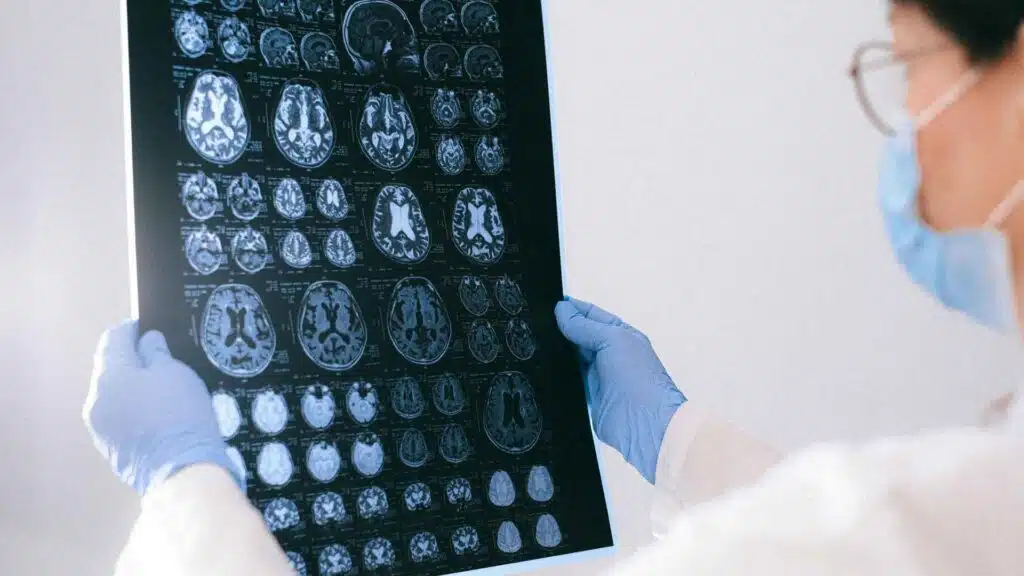
Sometimes it’s the imaging. A CT scan, the test most emergency rooms reach for first, is good at spotting bleeding but far less reliable at picking up a small stroke tucked deep in the brainstem. An MRI does a much better job, but it takes longer to schedule and isn’t always ordered right away, especially if the CT scan already came back looking normal and the patient seems stable. Occasionally, the images are captured correctly, but a subtle abnormality is overlooked during the read.
None of this means every hospital visit that ends in a missed diagnosis involved carelessness. Many people who walk into an ER with dizziness do not turn out to be having a stroke, and doctors have to weigh probabilities constantly. But when the rare case is missed, and treatment is delayed past the window where clot-busting medication (tPA) or a clot-removal procedure could have worked, the result can be permanent and devastating.
One story that captures this reality involves a young man from Georgia who, in his mid-forties, was active, athletic, and healthy right up until the day everything changed. During a routine appointment unrelated to his heart or brain, he suddenly became dizzy and disoriented. When he was evaluated, the concern that came up first wasn’t a stroke; it was something more ordinary. He was sent home.
Hours later, he collapsed. By the time doctors understood what was actually happening, the opportunity to reverse the damage had closed. He was left with locked-in syndrome: fully aware, fully himself on the inside, but unable to move or speak.
His family later pursued legal action, and the case was eventually resolved in a way that provided funds for his long-term care. His parents transformed part of their home into something resembling a small hospital ward, complete with therapy equipment and medical supplies lining what used to be the garage. The settlement paid for that transformation and for the round-the-clock support he now needs. What it could not do was give him back the life he had before: the ability to run, to speak freely, or to leave the house on his own.
Stories like this one raise a hard question: when does a missed stroke cross the line from a tragic outcome into something the legal system considers negligence?
The answer usually comes down to a single idea that shows up again and again in medical cases: the standard of care. In plain terms, this means asking whether a reasonably careful emergency team, faced with the same symptoms and the same information, would have acted differently. It isn’t about punishing doctors for being human or for making a reasonable judgment call that didn’t pan out. It’s about identifying situations where the response fell short of what a competent team should have done.
This is exactly why accountability in these cases usually can’t be sorted out by a family or by the hospital involved. It typically requires an independent medical opinion—a physician outside the case who can look at the timeline and the imaging and say, honestly, whether the ball was dropped or whether the outcome was simply beyond anyone’s control.
If a delayed diagnosis led to permanent harm, you may be entitled to compensation. Speak with our legal team today.
Start My Free Case Review
Certain patterns tend to show up in cases where accountability later becomes a real issue.
None of these patterns prove wrongdoing on their own. Emergency rooms operate under real pressure, and the majority of dizziness and headache complaints are not strokes. But when these patterns line up with a devastating outcome like locked-in syndrome, they’re exactly the kind of details that a legal review is designed to examine.
Legal accountability is only possible when there’s a clear, accurate account of what happened, which is why preserving records matters so much. Families should write down their own recollection of events as soon as they can, including exact times for the following whenever possible:
The official medical record backs this up with something more objective. Patients and families have a legal right to request hospital charts, test results, and imaging, usually through a medical records department or online portal. Imaging deserves special attention here, since CT and MRI scans are often the clearest evidence of how much time passed before a stroke was actually identified and whether the images themselves were read correctly the first time.
Requesting these records isn’t the same as filing a lawsuit, and most families who do it are simply trying to understand what happened. But that documentation becomes essential if the question of accountability moves forward later.
If your questions remain after the records are in hand, a legal review is the next real step toward accountability. We start with a consultation, where we listen to what happened and begin building a picture of the timeline. From there, our attorneys walk through that timeline with independent physicians, examining whether imaging was ordered promptly enough, whether the interpretation of scans was reasonable, and whether the standard of care held up at each decision point along the way.
Sometimes this process confirms that, given what was known at the time, the medical team did everything a competent team could have done. Other times, we uncover a real gap: a stroke that should have been caught sooner, a scan that should have been ordered faster, or a discharge that shouldn’t have happened. When that gap is real, pursuing a case is one of the only tools you have to hold a hospital or physician accountable, and to fund the enormous, lifelong cost of caring for someone with locked-in syndrome.
We won’t pressure you into moving forward. The choice belongs entirely to you, and we understand it can take time to make.
We want to be honest about the limits here. A verdict or settlement can pay for a converted garage full of medical equipment, round-the-clock caregiving, and years of therapy. It cannot undo a stroke, restore a voice, or give someone back the ability to walk out of their own front door. Legal accountability isn’t a substitute for what was lost; it’s a way of making sure that loss is at least acknowledged, and that the resources exist to build the best possible life within it.
Pursuing that accountability isn’t about anger, even when anger is part of the story. It’s about making sure a hospital’s failure to recognize a stroke doesn’t go unexamined, and that the next family walking into an ER with unclear symptoms has a better chance than the last one did. That’s the work our locked-in syndrome lawyers do, and Newsome Law is ready to talk with you about your own family’s story whenever you’re ready.
Locked-in syndrome (LIS) is a condition where a person can't move or speak, but their mind stays fully awake and...

When someone is diagnosed with locked-in syndrome (LIS) due to an accident, medical error, or negligence, families want to know...

Every medical malpractice case is different, but every case must prove the same things. You must be able to prove...
Imagine going to the hospital because your sodium levels are dangerously low. Doctors fix it fast, but the treatment itself...

Locked-in syndrome (LIS) isn’t an easy diagnosis to contend with for the patient or their family. It arrives without...

For the families of someone with locked-in syndrome, one reality sets in fast: the medical challenge is only half the...

If someone you love has suffered a major stroke or brain injury and doctors describe them as comatose or unresponsive,...

Locked-in syndrome can occur from any injury or illness that affects a specific part of the brain. Below, our locked-in...