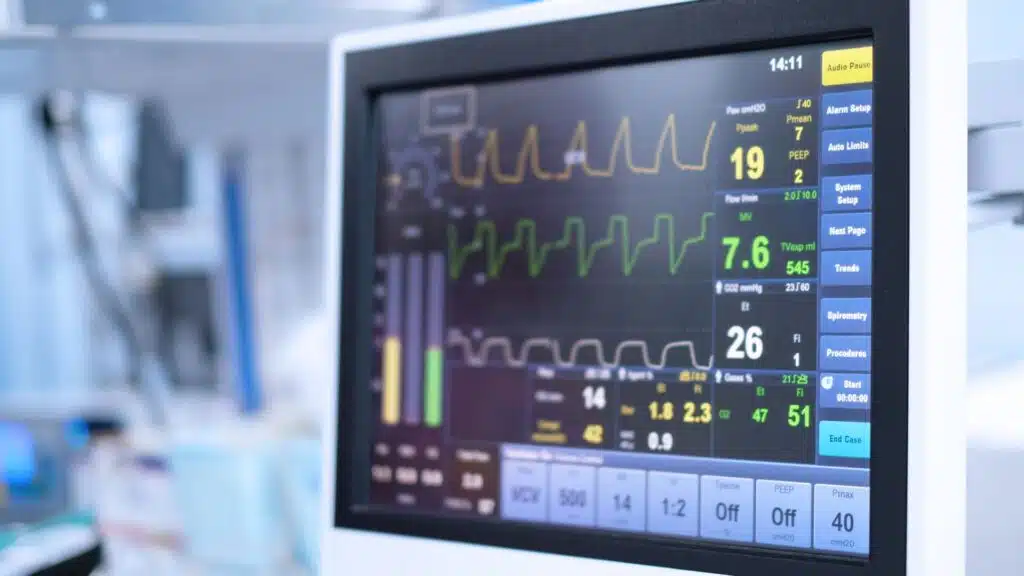

Tracheostomy & Ventilator Management
A tracheostomy and a ventilator can feel like foreign objects at first: tubes, machines, and sounds that take over a...

Doctors generally classify locked-in syndrome into three categories based on the type and extent of voluntary movement a person retains after the brain injury stabilizes. This evaluation often occurs after the initial emergency phase has passed and swelling in the brain has decreased, typically around the time rehabilitation begins.

Legally Reviewed By
Attorney Rich Newsome
Catastrophic Injury & Medical Malpractice Attorney
25+ years experience

There are three different types, called categories, of locked-in syndrome. When doctors diagnose someone with the condition, the medical professional will evaluate their abilities and impairments to determine which category their condition falls into. These categories include:
In general, those with the incomplete form of locked-in syndrome retain the most voluntary movement, while those with the total form retain no voluntary movement. All patients with locked-in syndrome (LIS) are fully conscious and aware of their surroundings, regardless of their ability to move or communicate.
In some cases, however, locked-in syndrome is not recognized immediately. Because awareness can remain intact despite profound paralysis, diagnosis may occur later, once subtle signs of communication or movement are identified.
One of the most important differences between the three forms involves communication. Even very limited movement, such as blinking or slight eye movement, can allow a person to interact with loved ones, participate in medical decisions, and express pain, discomfort, or emotional needs. Preserved communication ability often becomes central to both care planning and quality of life.
The classic form of locked-in syndrome most commonly occurs after a severe stroke affecting the brainstem or pons. The person experiences quadriplegia and loses the ability to speak because the muscles responsible for movement and speech no longer function voluntarily. However, consciousness, memory, and awareness remain intact.
In classic locked-in syndrome, patients generally retain vertical eye movement and the ability to blink. These small movements become critically important forms of communication. Families and care teams may use blinking systems, eye-tracking devices, or eye gaze technology to allow the person to answer yes-or-no questions, spell words, or communicate basic needs. Over time, some individuals develop remarkably sophisticated communication methods using assistive technology despite profound physical limitations.
Because the patient cannot speak or gesture, recognizing purposeful eye movement is essential. Early confusion about responsiveness can delay diagnosis, particularly in the acute stages after a stroke.
The incomplete form of locked-in syndrome also involves preserved consciousness and severe paralysis, but the person retains some additional voluntary movement beyond blinking and vertical eye movement. This may include:
Although these movements are often minimal, they can significantly expand communication options. Some patients may be able to operate adaptive switches, use modified keyboards, or interact more effectively with speech-generating devices. Even very small motor function can improve a patient’s ability to communicate discomfort, participate in therapy, or maintain social interaction with family members.
The incomplete form exists on a spectrum, and retained movement varies widely from one person to another. In many cases, these movements are subtle remnants of motor function rather than meaningful physical recovery. Still, preserving any reliable method of communication can have a substantial emotional and practical impact on both the patient and caregivers.
The total form of locked-in syndrome results in complete paralysis, including the loss of vertical eye movement and blinking. Although the person may remain fully conscious and aware, they are unable to communicate outwardly in traditional ways. This makes total locked-in syndrome the most difficult form to diagnose and among the most emotionally challenging for families and medical providers.
Without observable movement, patients with total locked-in syndrome may initially appear unresponsive or unconscious despite preserved awareness. Advanced neurological testing and brain activity studies may sometimes help physicians identify signs of consciousness that are not otherwise visible.
Communication options for total locked-in syndrome remain extremely limited, but evolving technology continues to offer new possibilities. Researchers are studying brain-computer interface systems that may allow patients to communicate using detected brain signals rather than physical movement. While these technologies are still developing, they represent an important area of hope for individuals who are otherwise completely unable to interact with the outside world.
We’re here to answer your questions and help you understand your options.
Schedule a Free Consultation
All three different types of locked-in syndrome occur in the same ways. However, the areas of the brain affected, how long the brainstem or pons lack blood flow, and other factors determine which type of locked-in syndrome develops.
Some of the most common causes of locked-in syndrome include:
For example, if a blood clot only partially blocks blood flow to the brainstem or if doctors restore blood flow quickly, an incomplete injury may be more likely to occur.
Significant recovery from the classic or total forms of locked-in syndrome is rare, although there are cases recorded in medical journals.
Across all three forms of locked-in syndrome, communication remains one of the most important aspects of care. Identifying even the smallest purposeful movement can help restore connection, preserve dignity, and allow patients to participate more fully in their medical treatment and daily lives.
Most people with the classic form remain bed-bound but may be able to communicate using eye gaze devices or brain-computer interfaces. Communication is more difficult with the total form of LIS; however, there are developing technologies that can make this easier.
Power wheelchairs with eye gaze controls can make it possible for people with LIS to get around. However, they still rely on caregivers for most, if not all, activities of daily living.
For some, significant recovery is possible even after classic or total locked-in syndrome. Studies, such as one published in Brain Injury, show that some people may learn to breathe on their own, swallow, speak, or regain some level of functional movement. In a few documented cases, such as one published in JAMA, the patient has learned to walk or regain other major motor functions.
Recovery for those with the incomplete form depends on the voluntary movement they retain. Some people may make a near-full recovery, while others remain bed-bound and dependent on caregivers.
When a brainstem stroke goes unrecognized, the critical treatment window for thrombolytic therapy or mechanical thrombectomy closes rapidly. Without timely intervention to restore blood flow, ischemic damage to the pons, the brainstem region governing voluntary motor control, can become irreversible, leaving a person trapped in a body they can no longer move.
Emergency physicians may discharge patients whose symptoms appear minor or present as another condition, only for those individuals to deteriorate hours later.
If you have a loved one who received a locked-in syndrome diagnosis, the lawyers from Newsome Law will review your case for free. In some cases, LIS results from a medical provider’s negligence. Let our locked-in-syndrome attorneys evaluate your case and see if you can pursue compensation on their behalf.
Reach a member of our team today. We can handle even the most complex civil litigation.
Real stories from families we've helped through difficult times.
 5.0
5.0
Newsome Law are fantastic! They have been working on my case for the past 3+ years and I have not once had a bad experience with anyone who works there. They have worked tirelessly to help me through my accident and the medical bills that loomed overhead. I am extremely pleased and grateful to have them, fighting on my side during this period in my life.
5.0
Selecting a Law Firm in a time of tragedy , is one of the most important decisions you will make in your lifetime. There are so many Firms out there that will chase you down , make unrealistic commitments and set unrealistic expectations. This is the last thing that is needed in such a painful and difficult time
Newsome Law Is a step above all the rest. They are not some run-of-the-mill Firm. But rather an experienced Team of established excellence and success. As one of Newsome Law’s grateful clients, they always operated in the best interest of my family. Were always available to take my call , and were compassionate to the pain and needs of my family. Newsome Law is the right Firm for you to choose.
5.0
5 Stars???!!!! These guys deserve the universe!!!!!!! They came through with every promise and were professional, diligent, smart, friendly, and understanding of the situation I was going through every step of the way. Very happy with the customer service so if that’s a thing for you, that’s another reason to go here. Honestly you will be making a mistake if you don’t go here. Rich is top tier in the US for attorneys and he definitely fought hard to get the job done here. If you want your money… GO HERE!!!!!!!
5.0
Newsome Law represented me in a very positive manner. Always professional, courteous, supportive and attentive. They were always able to keep me apprised of the status of my case. The team on my case were always easy to work with and on top of all issues. I never had to wonder where we were at in the process. I would recommend them to anyone needing this type of help in the future.
5.0
Just an amazing experience with the Newsome Law firm. Our case was very sensitive and close to our hearts. We were treated with the utmost respect for our situation and everything was handled in a professional and timely manner. We cannot say enough good things about the entire team!
5.0
I am so pleased to have worked with this firm. The attention to detail, time spent one on one, not feeling like I was just a number and someone truly caring about what was going on with me and my case was more than I could have ever hoped for. I will use this firm again if I ever need one and will recommend to everyone who asks to reach out to Newsome Law if they find they ever need someone to represent them. More than pleased and happy with everyone and everything from the office. Thank you from the bottom of my heart!
5.0
I am so pleased to have worked with this firm. They went above and beyond for my sons case. I would highly recommend this firm to anyone. Always communicated with us, always answered all our questions and fought for my sons case to get the best. Newsome Law thank so much again for all you did. God Bless!
5.0
Partnered with this law firm under unfortunate circumstances and ended up being a great success. They understood the mission and intent, and collectively, conducted all of the behind the scenes work, resulting in a successful end result. If you want one of the best, here’s your opportunity and highly recommended.
5.0
When you’re in a hospital bed all jacked up from an accident and you google best personal injury attorneys, this is who you will find, and they are. Never had been in a lawsuit before and had never needed an attorney. They took such amazing care of me, and handled everything so professionally. A great team of paralegals and attorneys. Thank you so much guys.
A tracheostomy and a ventilator can feel like foreign objects at first: tubes, machines, and sounds that take over a...
Locked-in syndrome (LIS) changes everything overnight, including a family's finances. Once income stops, Social Security disability benefits can become a...

Learning your child has locked-in syndrome can feel like standing in a room with no map. It's a rare diagnosis,...

While there are occasional cases that make the news of someone recovering from locked-in syndrome or a similar diagnosis, this...
The area of the brain that can cause locked-in syndrome (the pons) following a stroke is the same area of...

Because it causes near-global paralysis, takes away the ability to speak, and prevents a person from providing self-care, locked-in syndrome...
Locked-in syndrome occurs when an injury to the brainstem prevents the brain from communicating with the spinal cord and the...
Some people diagnosed with locked-in syndrome continue to feel pain and retain sensation throughout their body or in limited areas...