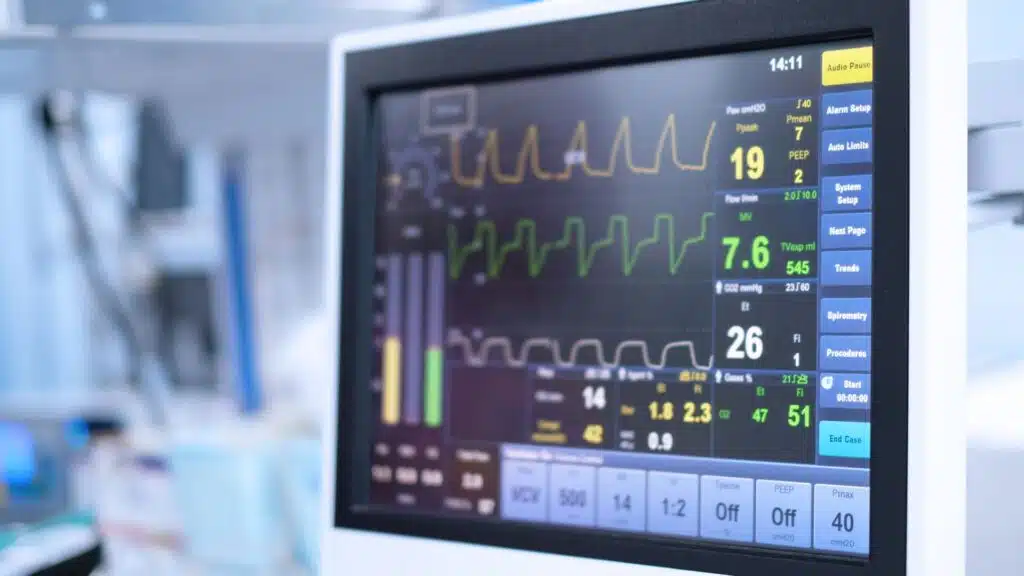

Tracheostomy & Ventilator Management
A tracheostomy and a ventilator can feel like foreign objects at first: tubes, machines, and sounds that take over a...


Legally Reviewed By
Attorney Rich Newsome
Catastrophic Injury & Medical Malpractice Attorney
25+ years experience

The area of the brain that can cause locked-in syndrome (the pons) following a stroke is the same area of the brain that regulates the pace and depth of autonomic breathing. For this reason, there is significant danger of pulmonary complications with locked-in syndrome.
This is true both during the acute phase of a stroke that leads to locked-in syndrome and in patients who remain bed-bound following a diagnosis.
Pulmonary complications with locked-in syndrome are the leading cause of death, according to a study in Cureus. They are also a leading cause of death after a spinal cord injury, according to a 2005 study published in the BMJ.
Locked-in syndrome affects breathing in several distinct ways, and understanding each one helps explain why respiratory care is such a central part of treatment.
Patients with locked-in syndrome often cannot cough effectively or clear their own airway. Saliva, food particles, or stomach contents can slip into the lungs instead of the esophagus, a problem called aspiration. Once foreign material sits in the lungs, bacteria can grow and trigger an infection. Because patients also spend long periods lying down, secretions tend to pool in the lower lungs, creating another opportunity for infection to take hold.
When areas of the lung aren’t regularly filled with a deep breath, small air sacs called alveoli can collapse. This is known as atelectasis. Shallow breathing, whether from muscle paralysis or sedation, makes this more likely. Collapsed lung tissue can’t participate in gas exchange, which lowers oxygen levels and allows infections to develop in that section of the lung.
Because the pons controls the automatic drive to breathe, damage in this area can interrupt the signals that tell the diaphragm and chest muscles to work. Without this signal, breathing can become too shallow or too slow to meet the body’s oxygen needs, a condition called respiratory failure. This is often the most immediate danger in the hours after a stroke and is the main reason so many patients require a ventilator right away.
As we will discuss below, blood clots that form in the legs can travel to the lungs and block blood flow there. This differs from pneumonia or atelectasis in that it isn’t caused by infection or collapsed tissue, but by a mechanical blockage, and it can turn from stable to life-threatening in minutes.
Many of these complications feed into one another. Shallow breathing contributes to atelectasis, which raises the risk of infection. Weak coughing raises the risk of aspiration, which raises the risk of pneumonia. This is why care teams treat respiratory support, positioning, and secretion management as a connected set of priorities rather than separate problems.
During the stroke and in the next hours and days, the patient’s breathing is usually severely impaired. The doctors may need to focus on maintaining an airway and ensuring adequate oxygenation before they can begin restoring blood flow in the brain.
Most people who suffer from this type of brain injury need assisted ventilation, a tracheotomy, or other intensive respiratory support during their initial treatment. As the days go by, the doctor will likely prescribe respiratory therapies to try to wean the patient off the ventilator.
Like most bed-bound patients, those with locked-in syndrome are at an increased risk of aspirating bronchial secretions and developing pneumonia and other pulmonary complications. To limit complications, patients may require ongoing therapies that include:
Prevention of pneumonia and other secondary infections is key to long-term survival. According to the BMJ, as many as 80 percent of those diagnosed with locked-in syndrome who survive the initial treatment live for at least 10 years.
If a delayed diagnosis led to permanent harm, you may be entitled to compensation. Speak with our legal team today.
Start My Free Case Review
Lying in bed for long stretches doesn’t just raise the risk of pneumonia. It also raises the risk of dangerous blood clots. When the legs stay still for too long, blood can pool and thicken in the veins, especially in the calves and thighs. This condition is called deep vein thrombosis, or DVT.
DVT is a serious concern for people with locked-in syndrome because paralysis leaves them unable to move their legs on their own. A clot that forms in the leg can break loose and travel through the bloodstream. If it reaches the lungs, it can block blood flow there, causing a pulmonary embolism. This is a life-threatening emergency that can cause sudden difficulty breathing and even death.
Because of this risk, hospital teams usually take steps to keep blood moving even when a patient cannot move on their own.
One common tool is a leg compression device, sometimes called a sequential compression device or intermittent pneumatic compression device. These are soft sleeves that wrap around the calves and connect to a small pump. The sleeves tighten and release in a steady rhythm, gently squeezing the legs the way walking naturally would. This action pushes blood back toward the heart and helps prevent it from pooling and clotting.
These devices offer a way to lower clot risk without medication, which makes them useful for patients who cannot safely take blood-thinning drugs for other medical reasons. In some cases, doctors use compression devices together with blood thinners for added protection.
Wearing the sleeves can cause mild irritation on the skin. Care teams keep an eye on the legs during use and can adjust or remove the devices if any skin problems come up. The patient may also feel warm or cold during therapy.
Alongside compression devices, caregivers and therapists use passive range-of-motion exercises to help protect circulation. During these sessions, a therapist or trained caregiver gently moves each of the patient’s joints through its normal range of motion. While the main goal of this therapy is to prevent muscles and joints from stiffening into fixed positions, the movement also helps keep blood flowing through the limbs, which supports clot prevention as part of a patient’s daily care routine.
For some patients, doctors may also prescribe blood-thinning medication to lower clotting risk further. Doctors track their effects carefully over time and adjust doses as needed to balance protection against clots with the risk of bleeding.
Together, these approaches give care teams multiple ways to protect a bed-bound patient from a complication that could otherwise turn deadly.
If doctors diagnosed your loved one with locked-in syndrome after a misdiagnosed stroke, traumatic brain injury, CPM, or another event, you may be eligible to pursue compensation to help pay for their treatment, rehabilitation, and ongoing care. Let the team from Newsome Law review the facts of your loved one’s case.
A locked-in syndrome attorney from Newsome Law can help you with this complex civil litigation. Call whenever you are ready to get started.
A tracheostomy and a ventilator can feel like foreign objects at first: tubes, machines, and sounds that take over a...

Locked-in syndrome (LIS) changes everything overnight, including a family's finances. Once income stops, Social Security disability benefits can become a...

Learning your child has locked-in syndrome can feel like standing in a room with no map. It's a rare diagnosis,...

While there are occasional cases that make the news of someone recovering from locked-in syndrome or a similar diagnosis, this...

Because it causes near-global paralysis, takes away the ability to speak, and prevents a person from providing self-care, locked-in syndrome...

Locked-in syndrome occurs when an injury to the brainstem prevents the brain from communicating with the spinal cord and the...
Some people diagnosed with locked-in syndrome continue to feel pain and retain sensation throughout their body or in limited areas...

Patients with locked-in syndrome can hear you and may be able to respond. They typically have global paralysis, except for...