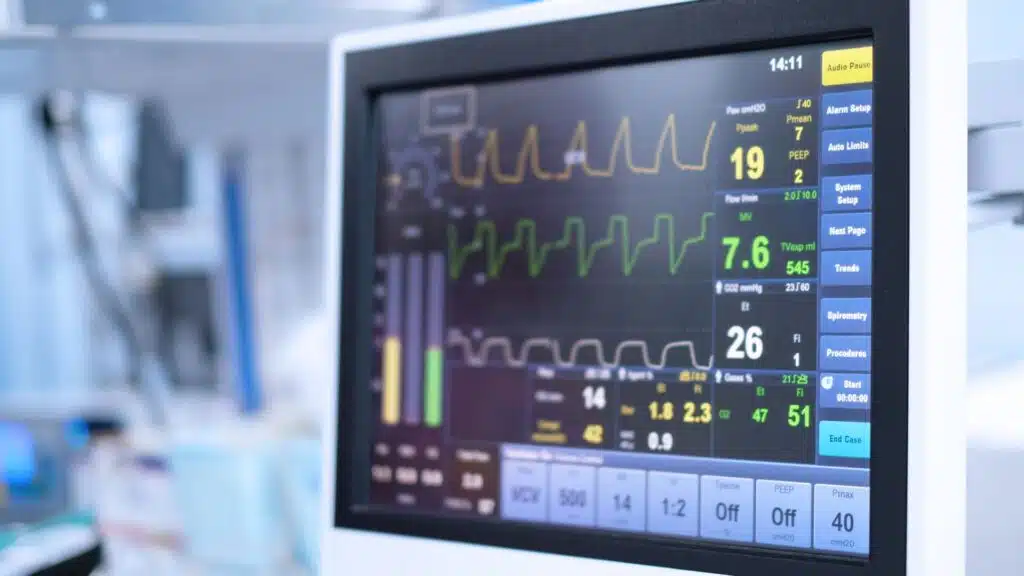

Tracheostomy & Ventilator Management
A tracheostomy and a ventilator can feel like foreign objects at first: tubes, machines, and sounds that take over a...


Legally Reviewed By
Attorney Rich Newsome
Catastrophic Injury & Medical Malpractice Attorney
25+ years experience

For the families of someone with locked-in syndrome, one reality sets in fast: the medical challenge is only half the story. The other half is financial, and it’s a scale of spending that few people are prepared for. Between round-the-clock nursing care, specialized equipment, home renovations, and decades of ongoing medical needs, the lifetime cost of managing locked-in syndrome (LIS) routinely climbs into the millions of dollars. This post breaks down exactly where that money goes.
Unlike many severe medical conditions, people with locked-in syndrome can live for decades when care is managed well. That’s good news for patients and families, but it also means costs don’t stop after a few years of rehabilitation. They continue for decades, covering total dependency for feeding, mobility, communication, and continuous medical monitoring. That combination of long life expectancy and total physical dependency is exactly what pushes lifetime costs into rare territory.
It can be easier to understand the costs of LIS management when you break them down.
The financial hits start immediately. Initial hospitalization and ICU stays, inpatient rehabilitation, and ongoing visits to neurologists, pulmonologists, and other specialists all add up quickly in the first months. Emergency care for complications, such as aspiration pneumonia, infections, and autonomic dysregulation, adds further unpredictable costs on top of the baseline.
This is, by a wide margin, the single largest driver of lifetime cost.
Covering care around the clock isn’t as simple as hiring one caregiver. The skill level matters enormously in cost calculations as well:
Depending on skill level and region, annual costs for this level of care commonly run $150,000 to $400,000 or more per year. For example:
These costs differ depending on the city and state. For example, Louisiana’s annual median cost for a semi-private room was approximately $91,000 in 2025, while Maine’s annual median cost for a semi-private room was approximately $201,000, per Genworth.
Multiply that across 20 to 40 years of life expectancy, and 24/7 care alone can total several millions over a lifetime.
A long list of specialized equipment is required just to keep a patient safe and comfortable day to day, including:
None of this is a one-time purchase. Most DMEs are expected to last at least three years but may need replacement or major maintenance after, turning this into a recurring line item for the rest of the patient’s life.
For someone who is cognitively intact but almost entirely unable to move, communication technology isn’t a luxury; it’s a lifeline. Communication devices are available, but they can be costly. Your average letterboard can cost anywhere from $5 to $100.
Other technology can be much more costly.
Eye-tracking communication devices can cost thousands, and that’s before accounting for software licensing, technical support, ongoing training, and periodic replacement as either the technology improves or the patient’s eye function changes over time.
Making a home livable and safe for someone with locked-in syndrome usually requires substantial construction and renovation work:
Altogether, one-time home and vehicle modification costs frequently land between $100,000 and $300,000, with ongoing maintenance costs continuing after that initial investment.
Even without the goal of full recovery, ongoing therapy is essential to prevent complications and preserve quality of life:
Day-to-day costs also include ongoing prescriptions, feeding tube supplies, catheters, wound care products, incontinence supplies, and skin integrity products needed to prevent pressure sores, which is a constant risk for anyone who is immobile.
The financial toll isn’t limited to direct medical spending. Families frequently absorb:
If a delayed diagnosis led to permanent harm, you may be entitled to compensation. Speak with our legal team today.
Start My Free Case Review
Professional life-care planners build lifetime cost projections using a combination of life expectancy estimates, assumptions about medical inflation, and present-value discounting (especially relevant in legal settlement contexts). When all categories are combined, families can find themselves facing over $10 million in lifetime costs, depending on several factors.
Not every case looks the same financially. Several factors shift the total significantly:
With costs at this scale, funding sources matter enormously. No single program covers everything, and most families end up piecing together support from several places at once.
Because none of these sources cover everything on their own, most families end up drawing from more than one at the same time.
Locked-in syndrome forces families to plan not just for medical care, but for a multi-million-dollar, multi-decade financial commitment. Understanding where those costs come from, and which categories dominate the total, is the first step toward realistic planning, whether that means navigating insurance and public assistance, pursuing legal compensation, or simply understanding what lies ahead.
Newsome Law’s locked-in syndrome lawyers can help you understand your options and determine how this happened to your loved one.
A tracheostomy and a ventilator can feel like foreign objects at first: tubes, machines, and sounds that take over a...

Locked-in syndrome (LIS) changes everything overnight, including a family's finances. Once income stops, Social Security disability benefits can become a...

Learning your child has locked-in syndrome can feel like standing in a room with no map. It's a rare diagnosis,...

While there are occasional cases that make the news of someone recovering from locked-in syndrome or a similar diagnosis, this...

The area of the brain that can cause locked-in syndrome (the pons) following a stroke is the same area of...

Because it causes near-global paralysis, takes away the ability to speak, and prevents a person from providing self-care, locked-in syndrome...

Locked-in syndrome occurs when an injury to the brainstem prevents the brain from communicating with the spinal cord and the...

Some people diagnosed with locked-in syndrome continue to feel pain and retain sensation throughout their body or in limited areas...