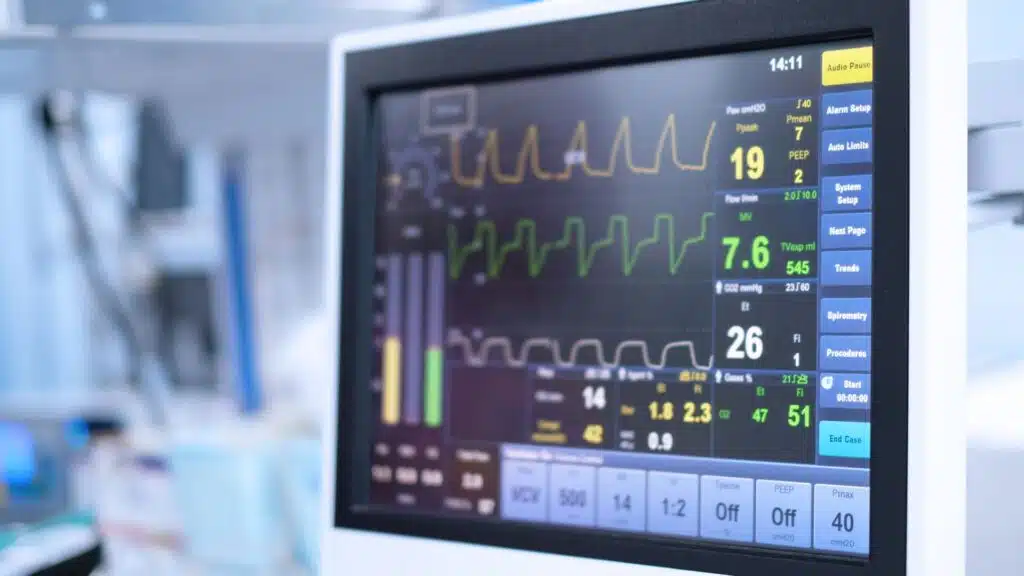

Tracheostomy & Ventilator Management
A tracheostomy and a ventilator can feel like foreign objects at first: tubes, machines, and sounds that take over a...

In the chaotic, confusing early days after a locked-in syndrome diagnosis, medical decisions need to be made. Treatments are discussed. Procedures are recommended. Risks and benefits are explained. And a pressing question emerges: How does medical consent work when a patient cannot speak or move?

Legally Reviewed By
Attorney Rich Newsome
Catastrophic Injury & Medical Malpractice Attorney
25+ years experience

Understanding how consent functions in the context of locked-in syndrome can help families feel steadier during an unsteady time. While each situation is unique, the principles that guide medical decision-making are clear, structured, and designed to protect patient autonomy. If desired, you can always speak with a locked-in syndrome attorney for further guidance.
Locked-in syndrome (LIS) is most commonly caused by a stroke affecting the brain stem, particularly the pons. Although the body is paralyzed, consciousness is typically preserved. Patients are often fully aware of their surroundings. They can think, reason, remember, and feel, but they cannot produce speech or voluntary movement in most parts of the body.
In many cases, vertical eye movement or blinking remains intact. These small movements become critically important. They may be the only reliable way a person can communicate.
This preserved awareness is the foundation for medical consent. If a patient can understand information and communicate a choice—even through eye movements—they may be able to provide informed consent.
Medical consent rests on four essential elements:
For patients with locked-in syndrome, the central question is not intelligence or awareness. It is communication. If a reliable method of communication can be established, consent may still come directly from the patient.
Capacity is task-specific and time-specific. A person may have the capacity to consent to one treatment but not another. Similarly, capacity may fluctuate depending on medical stability, medication effects, or fatigue.
Physicians typically assess whether the patient can:
In locked-in syndrome, this assessment often requires patience and adaptation. Doctors may use simplified explanations and confirm comprehension through yes/no responses using eye movements.
If the patient can reliably signal “yes” and “no,” more complex communication systems may follow. The evaluation is deliberate and careful. The goal is clarity, not speed.
Because speech is not possible in most cases, alternative communication methods are essential. These may include:
Establishing a reliable system takes time. Medical teams often involve speech-language pathologists and neurological rehabilitation specialists to assess communication ability. Once a dependable method is confirmed, the patient’s autonomy remains intact. A diagnosis of paralysis does not remove the right to direct one’s own care.
Right after a brain stem stroke occurs, communication may not be established yet. Sedation, mechanical ventilation, or medical instability can further complicate matters.
If a patient cannot communicate a decision, providers look to legal decision-making frameworks. These generally follow a structured hierarchy.
If the patient completed an advance directive, living will, or durable power of attorney for healthcare before the stroke, those documents guide decisions. A named healthcare proxy or agent steps into the decision-making role.
If no advance directive exists, state law determines who may act as surrogate decision-maker. This is generally a close relative, such as a spouse or a parent.
The surrogate’s responsibility is not to decide based on personal preference. Instead, they must apply either:
These standards exist to preserve dignity and autonomy, even when direct communication is temporarily or permanently unavailable.
Families often carry immense emotional pressure in these moments. Decisions may involve feeding tubes, ventilator support, surgical interventions, or complex rehabilitation plans.
It is important to recognize two truths at once:
First, locked-in syndrome does not eliminate the possibility of a meaningful life. Many individuals maintain rich internal experiences, relationships, and preferences. Some regain limited movement over time. Others build fulfilling lives using assistive technology.
Second, the early days are medically and emotionally complex. Information may feel overwhelming. The future may feel uncertain. It is okay to feel grief, frustration, and anger.
Clear communication between the medical team and the family becomes essential. Both the doctors and your lawyer should welcome your questions. Explanations should be repeated when needed. Decisions should not feel rushed unless urgency truly demands it.
While most medical teams approach consent with care and professionalism, misunderstandings can occur. If you have concerns, you can always reach out to an attorney for a legal review.
A thorough review of a case may examine questions such as:
Not every poor medical outcome results from a failure in consent. Stroke-related brain stem injuries are often sudden and severe despite appropriate care. Medicine cannot prevent every complication.
However, when consent procedures are unclear or bypassed, families may reasonably seek clarification. A careful review can help determine whether standards were followed and whether the patient’s autonomy was respected.
At its heart, medical consent exists to preserve dignity.
Locked-in syndrome can create the appearance of silence. But silence does not mean absence of thought, identity, or preference. The law and medical ethics both recognize this distinction.
The goal is not simply to authorize treatment. It is to ensure that care reflects the patient’s own values as closely as possible.
When communication is possible, the patient speaks—even through the smallest eye movement. When communication is temporarily lost, trusted surrogates step in with defined responsibilities. And when questions arise, careful review can provide guidance.
In the midst of profound physical limitation, autonomy still matters.
A diagnosis of locked-in syndrome changes the way decisions are made. Consent may require creativity, patience, and collaboration. It may involve assistive technology or surrogate decision-makers. It may evolve as recovery progresses.
Families deserve explanations about how these processes work. They deserve reassurance that their loved one’s awareness is recognized and respected. And they deserve the opportunity to ask questions when something is unclear. If you would like to speak with our team about medical decision-making after a brain stem stroke, Newsome Law is here to listen.
A tracheostomy and a ventilator can feel like foreign objects at first: tubes, machines, and sounds that take over a...

Locked-in syndrome (LIS) changes everything overnight, including a family's finances. Once income stops, Social Security disability benefits can become a...

Learning your child has locked-in syndrome can feel like standing in a room with no map. It's a rare diagnosis,...

While there are occasional cases that make the news of someone recovering from locked-in syndrome or a similar diagnosis, this...

The area of the brain that can cause locked-in syndrome (the pons) following a stroke is the same area of...

Because it causes near-global paralysis, takes away the ability to speak, and prevents a person from providing self-care, locked-in syndrome...

Locked-in syndrome occurs when an injury to the brainstem prevents the brain from communicating with the spinal cord and the...
Some people diagnosed with locked-in syndrome continue to feel pain and retain sensation throughout their body or in limited areas...