

Central Pontine Myelinolysis (CPM) and LIS
Some brain conditions don't come from an injury or a stroke. They come from something that happens inside the body's...


Legally Reviewed By
Attorney Rich Newsome
Catastrophic Injury & Medical Malpractice Attorney
25+ years experience

Most people think of medication errors as something small. A missed pill. A mix-up at the pharmacy counter. But some medication errors are serious enough to cause permanent, life-changing harm. One of the most devastating outcomes is bleeding in the brainstem, a small but critical area that controls nearly everything the body does. In rare cases, this kind of bleeding leads to locked-in syndrome (LIS), a condition where a person’s mind stays fully alert while their body becomes paralyzed.
This article explains how medication errors happen, how they can cause bleeding in the brainstem, how that bleeding can lead to LIS, and what families can do if they believe a medication error caused their loved one’s condition.
A medication error happens any time a planned treatment doesn’t go as intended, or the wrong treatment is used at all. Medication errors are one of the most common and most preventable causes of harm in healthcare.
Medication errors can happen at almost any point in a patient’s care:
Understanding the specific ways errors occur can help families recognize when something may have gone wrong. Common types include:
Errors like these are often caused by system problems rather than a single careless person. Heavy workloads, interruptions, illegible handwriting, look-alike drug names, and poor communication between doctors, nurses, and pharmacists all raise the risk. Patients who take multiple medications, are older, or have kidney or liver problems are at even higher risk, because their bodies process drugs differently.
Some of the medications most tied to serious bleeding in the brain are blood thinners (also called anticoagulants), such as warfarin. Blood thinners are prescribed to prevent dangerous clots, especially in people with conditions like atrial fibrillation or a history of stroke. But blood thinners work by making it harder for blood to clot, which means they also make it easier for a person to bleed.
Research on blood thinners shows just how serious this risk can be:
Because of these risks, small mistakes in dosing blood thinners can have outsized consequences. A prescribing error (too high a starting dose), a monitoring error (not tracking bloodwork closely enough to catch a dangerous buildup), or an administration error (giving more of the drug than ordered) can all push a patient’s blood thinner levels too high. When that happens in a blood vessel near or within the brainstem, the result can be a bleed in this small, densely packed structure.
Warning signs that a patient on blood thinners may be experiencing a brain bleed include:
Any of these symptoms in a patient taking blood thinners should be treated as an emergency requiring immediate evaluation.
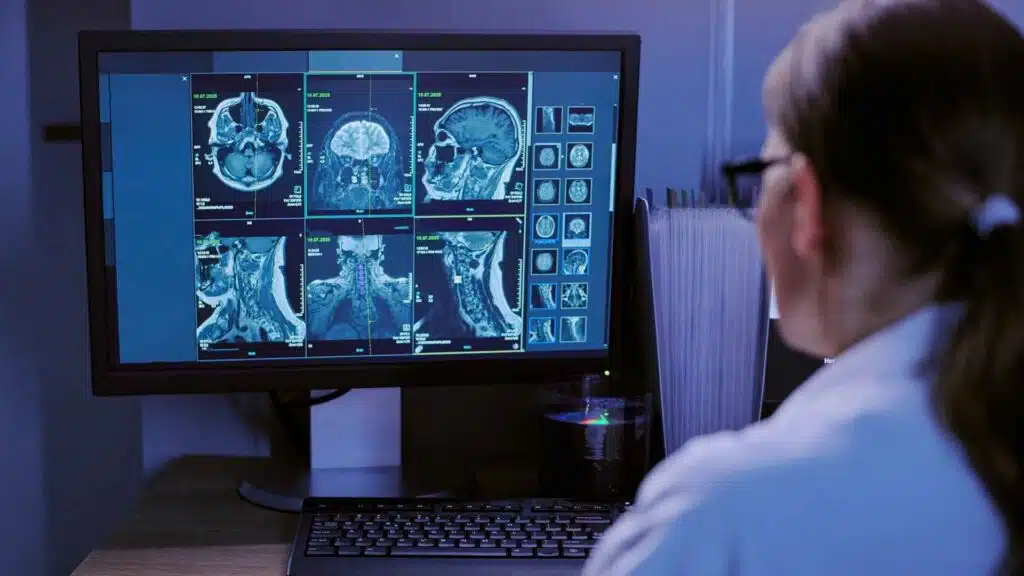
The brainstem is often described as the body’s “highway.” It’s a narrow structure that connects the brain to the spinal cord, and nearly every signal that tells the body how to move has to pass through it. The brainstem also controls essential functions like breathing, heart rate, and swallowing.
A specific part of the brainstem, called the pons, is especially important. Damage to the pons is the direct cause of locked-in syndrome. When bleeding occurs in this area, whether from a stroke, trauma, or a medication-related bleed, it can destroy the pathways that carry messages from the brain to the muscles of the face, arms, and legs.
The result is a devastating disconnect: the mind remains awake, aware, and thinking clearly, but the body can no longer respond. Most people with LIS cannot speak, chew, swallow, or move their limbs. Depending on the severity of the bleed, some retain the ability to blink or move their eyes vertically, which becomes their only way of communicating with the outside world.
If a delayed diagnosis led to permanent harm, you may be entitled to compensation. Speak with our legal team today.
Start My Free Case Review
When a medication error causes a bleed that leads to LIS, families are often left with painful, unanswered questions. Was the dose too high? Was the bleeding caught in time? Could this have been prevented? These questions are not about assigning blame for its own sake; they’re about understanding what happened and, when appropriate, pursuing accountability.
If you believe a medication error contributed to your loved one’s brainstem hemorrhage and LIS, there are concrete steps that can help build a clear picture of what occurred.
Start by writing down what you remember, as soon as you can. Note when symptoms began, what medications your loved one was taking, when doses were given, and what doctors or nurses told you at each step.
Then request the full official medical record. This includes:
Patients and families have a legal right to these records. Hospitals may take time to compile them, but persistence pays off. These records create an objective timeline that shows exactly what was ordered, what was given, and when warning signs appeared.
Because medication errors tend to fall into recognizable categories, it can help to ask specific questions when reviewing records:
A legal review does not mean you are committing to a lawsuit. It means asking an attorney experienced in medical cases to examine the facts objectively. A thorough review typically includes:
In many cases, this review brings clarity, even if the answer is that the care team acted appropriately given a difficult situation. In others, it may reveal a preventable error, such as a dosing mistake, a missed lab value, or a delayed response to warning signs, that changed the outcome.
It’s important to hold two truths at once. Medications like blood thinners carry real risk even when used correctly and monitored closely. Bleeding can happen despite excellent, careful care. At the same time, preventable mistakes do happen, and when they do, families deserve honest answers.
Pursuing a legal review is not an act of hostility. It’s an act of advocacy; it’s a way of making sure that if something went wrong, it’s identified, acknowledged, and addressed for both your family and future patients.
A brainstem hemorrhage caused by a medication error is a uniquely painful kind of tragedy, because it often involves a treatment that was supposed to help. Understanding how these errors happen, how they can lead to bleeding in the brainstem, and how that bleeding can result in locked-in syndrome gives families the knowledge they need to ask the right questions. And if those questions point toward a preventable mistake, preserving records and seeking a careful legal review can be an important step toward answers, and toward accountability.
Call Newsome Law when you are ready to work with our locked-in syndrome attorneys.
Some brain conditions don't come from an injury or a stroke. They come from something that happens inside the body's...
Brainstem strokes are the most common cause of locked-in syndrome. Understanding how brainstem strokes occur, what they affect, and how...
Most people who've heard of locked-in syndrome think of it as a physical condition. But the people who actually live...

Locked-in syndrome leaves patients fully conscious but almost entirely paralyzed, unable to move or speak. While meaningful motor recovery is...

Strokes are commonly misdiagnosed. However, every minute an ischemic stroke goes untreated, the brain loses neurons. tPA can reverse damage,...
Locked-in syndrome (LIS) is costly in all aspects. Establishing damages in a locked-in syndrome medical malpractice case is integral to...

In the moments after a stroke misdiagnosis, the question is not simply what went wrong but whether the care provided...

How Hypoglycemia Causes ABI Blood sugar is the fuel your body needs to keep functioning properly. If there is not...